Turn Your Child’s Drawing Into Embroidery
There are two good ways to do it. Stitch it yourself, which takes an evening or several, or photograph it and see it as real thread on a sweatshirt in about half a minute, then change any colour until it looks right, before anything is sewn.
T-shirt, sweatshirt or hoodie from $49 · free US shipping
You see the stitching, and change it, before you pay.
How Do You Turn a Child’s Drawing Into Embroidery?
A child’s drawing becomes embroidery when every line and coloured-in patch is turned into stitches of real thread. Someone has to decide which stitches, in which colours, and that decision is the whole job. You can make it yourself with a needle, you can send the drawing to a maker and wait to see what they decided, or you can watch it happen on screen and make the calls yourself.
The difference that matters most is when you first see the result. Stitching by hand, you see it as you go. Sending it away, you usually pay first and see it when a proof lands in your inbox, somewhere between half a day and a week later, and every change is another round trip. Ours shows you the stitched drawing on the garment in about half a minute, before you pay, and every change after that is instant.
| Route | What you do | When you see it | Changes | Cost |
|---|---|---|---|---|
| Stitch it yourself | Trace the drawing onto fabric and hand-embroider it | As you stitch it | Unpick and restitch | Hoop, floss and a few evenings |
| Send it to a maker | Pay, send a photo, then wait for a proof by email | After you have paid, typically 12 hours to 5 business days later | Message the maker and wait for the next proof; some cap free revisions, some stitch one colour only | Roughly $37 to $195 in the US |
| See it stitched on screen | Photograph the drawing on our embroidery page | In about half a minute, on the garment, before you pay | Instantly, as many times as you like, before paying | From $49, US shipping included |
How to Get the Preview Looking Just Right
The first version is a starting point, not a verdict. Here is how to use the preview on our embroidery page to get from that first read to a design you would happily wear.
- Photograph the drawing. Lay it flat in even daylight, keep your shadow off the page and fill the frame with the paper. Bold marker and crayon read best. Pencil works, but faint lines will be thickened.
- Watch it become thread. In about half a minute the drawing comes back as stitchable artwork, sitting on the garment. Every colour has already been matched to a real embroidery thread.
- Look at the close-up, not just the garment. The close-up is where you judge the thread. Check that each shape is there, that the faces still look like faces, and that nothing from the table or the fridge crept in.
- If a shape is off, read it again. Tap “Read the drawing again”. Each read is a fresh interpretation of the same photo, so the next one often lands on cleaner shapes and truer colours. It costs nothing, and you do not have to find the photo a second time. If several reads miss the same way, retake the photo in better light.
- Change any thread you do not love. Tap a thread to open all 15 stocked shades and pick another. Choosing one that is already in the design merges the two. “Stitch it all in one colour” turns it into a single-thread line drawing, and “Reset to the matched colours” takes you back.
- Try it on the garment you want. Switch between t-shirt, sweatshirt and hoodie, change the colour, and move it to the left chest or center chest. If a thread would barely show on the fabric you picked, the page tells you which one, so you can swap it before you commit.
- Approve exactly what you see. When it looks right, approve it. The embroiderer receives artwork built from the exact threads you chose, so there is no reinterpretation between your screen and the machine. Nothing is sewn until you have approved it and paid.
- White
- Black
- Grey
- Navy
- Aqua/Teal
- Purple
- Maroon
- Red
- Flamingo
- Orange
- Gold
- Old Gold
- Kiwi Green
- Kelly Green
- Royal
The 15 threads a design can be built from, up to six at a time.
Most shops that make embroidery from a drawing take the order first, then email a proof hours or days later, and every change is a message and another wait. Here the waiting is about half a minute, once, and the trying is yours. Try it with their drawing: seeing the preview costs nothing and commits you to nothing.
Does the Real Thing Match the Preview?
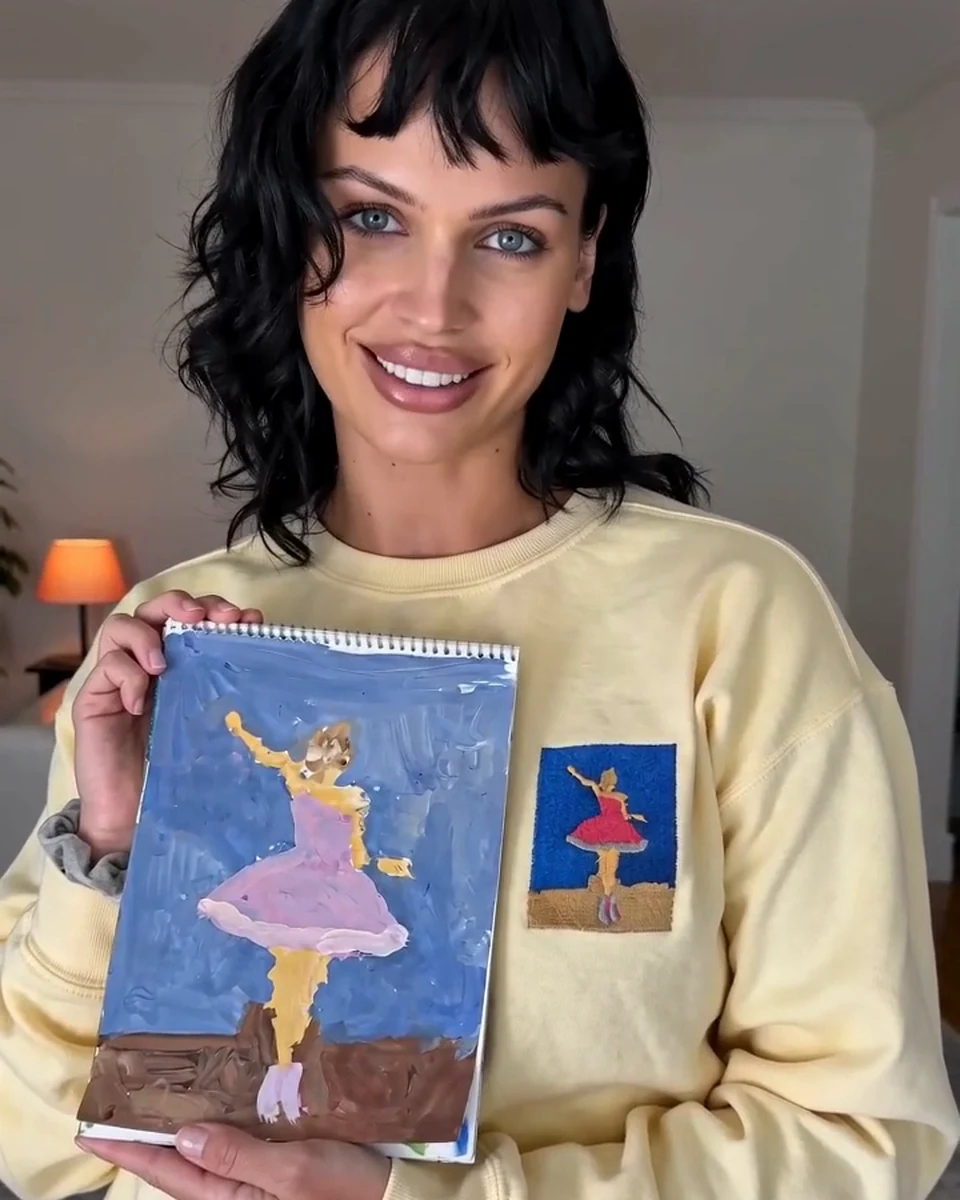
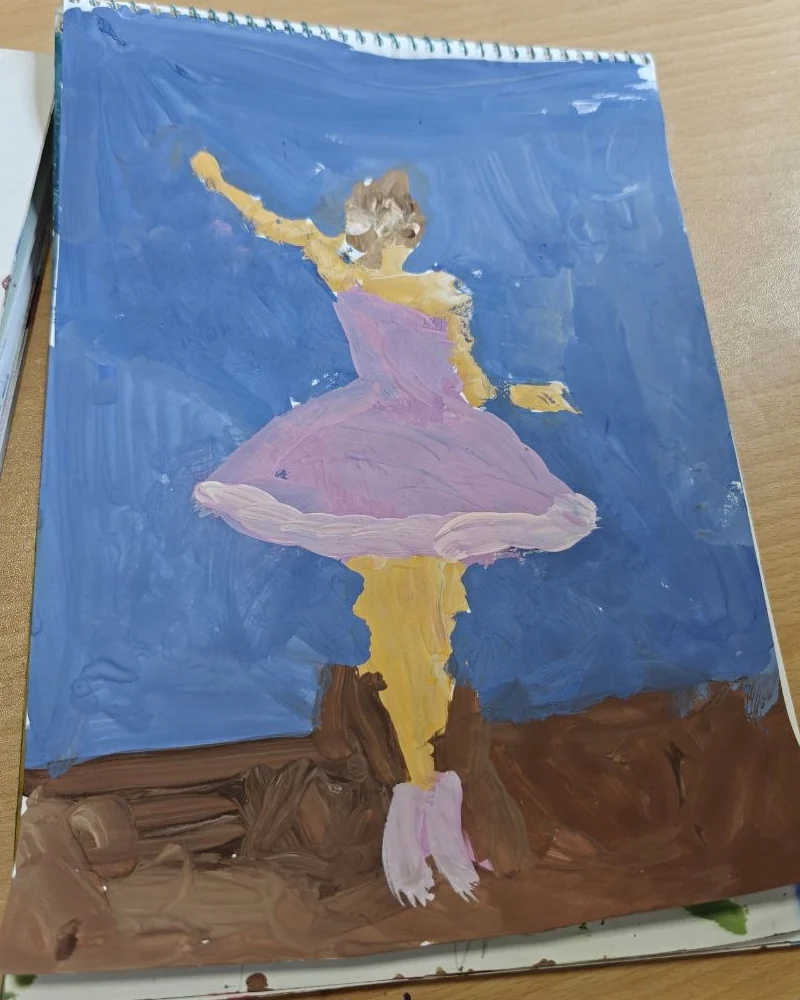
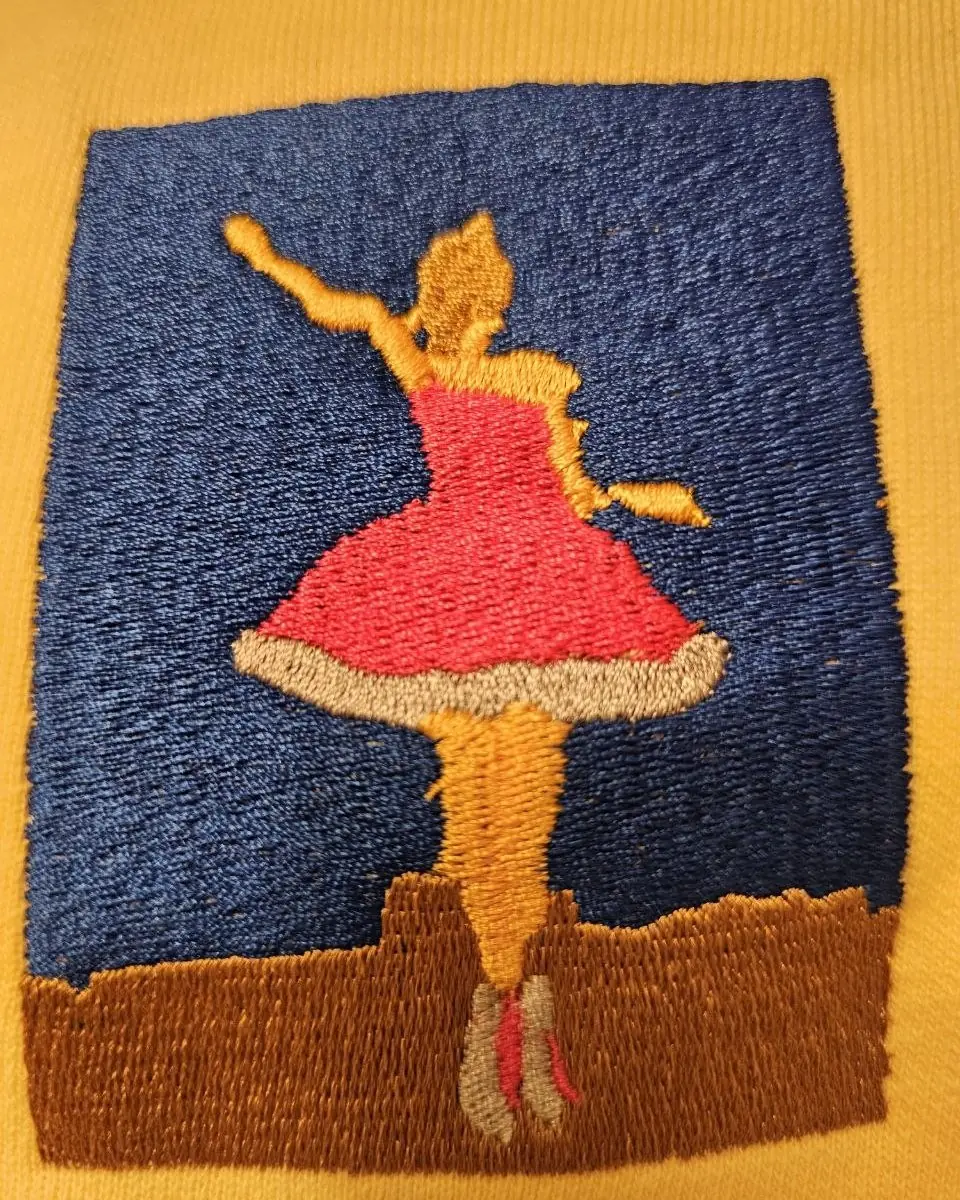
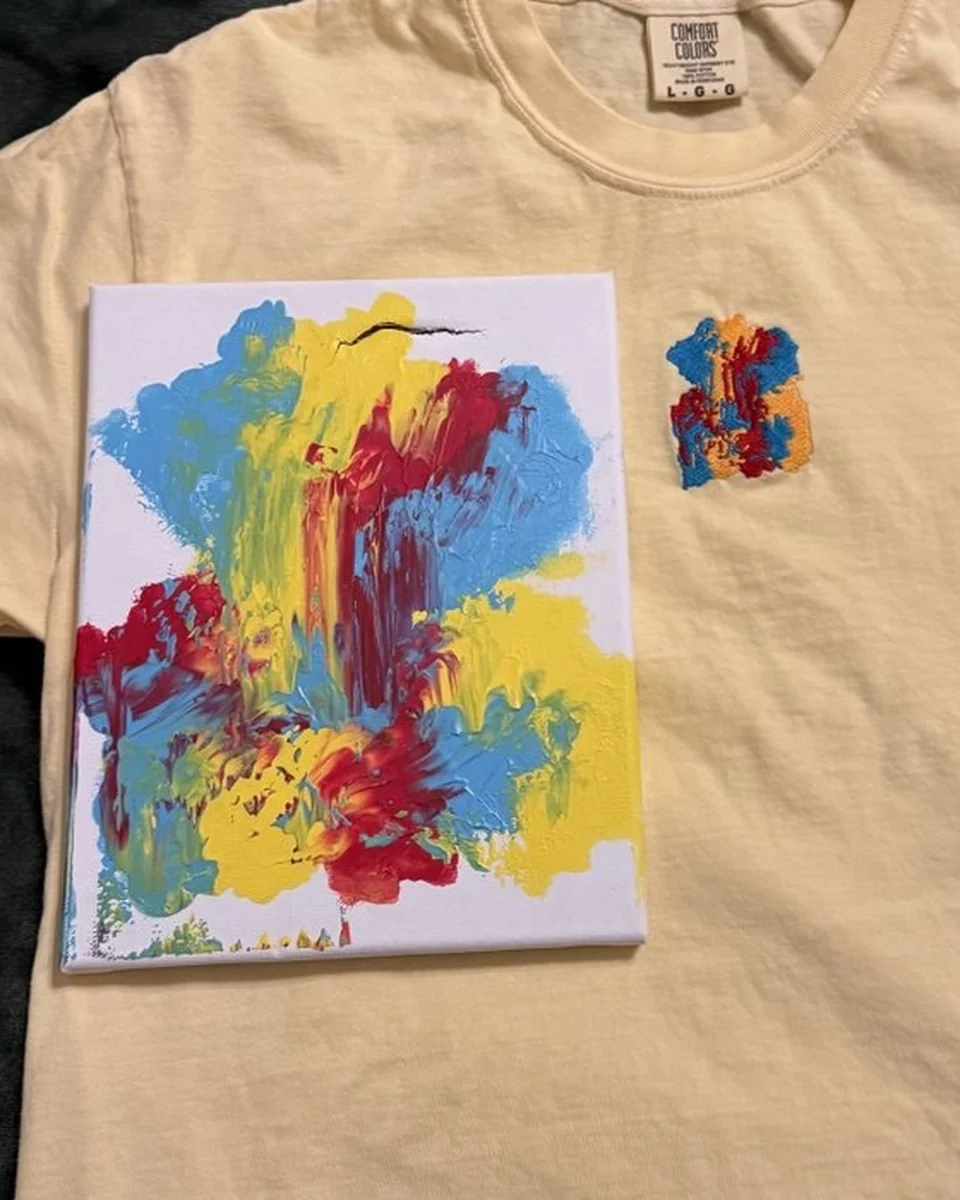
A preview is only worth trusting if the real thing matches it. These are photographs of finished orders, not mockups: a ballerina painting and its stitched version on a sweatshirt, and a toddler’s abstract painting laid on the t-shirt it became.
How to Embroider a Child’s Drawing by Hand
If you would rather make it yourself, this is the route, and it is a lovely one. You need an embroidery hoop, a needle, stranded cotton floss in the drawing’s colours, and either a water-soluble pen or a sheet of printable stick-on, wash-away stabilizer.
- Work from a copy. Photograph or scan the drawing and print it at the size you want to stitch. The original stays in the folder, safe from pins, pens and wash-away markers.
- Get it onto the fabric. On a thin, light fabric, tape the copy to a window or a light box and trace it with a water-soluble pen. On a sweatshirt or anything dark or thick, print it onto a stick-on, wash-away stabilizer instead, stick that down, and stitch straight through it.
- Hoop it. Stretch the area drum-tight in an embroidery hoop without pulling the knit out of shape. A sweatshirt wants a cut-away stabilizer on the inside, or the stitches pucker the moment it is worn, and a sheet of water-soluble topping on the front stops the stitches sinking into the fleece.
- Stitch the lines, then the colour. Backstitch or stem stitch follows a line. Satin stitch or long-and-short fills a coloured-in patch. French knots make eyes and dots. Two or three strands of floss is plenty for a child’s marker line.
- Wash out the guide. Soak or rinse until the pen marks or stabilizer dissolve, then let it dry flat. Expect a small drawing to take an evening or two and a full-page one far longer.
Hand embroidery keeps every wobble of the original, which is its charm. What it costs is evenings, and a hand-stitched garment wants gentle washing. If the drawing is going onto something that will be worn every week, machine embroidery is the sturdier choice.
Which Drawings Stitch Well?
Nearly all of them, as long as you know what thread can and cannot do. Every embroidery machine works to the same physical limits, and they decide how close the stitched version can get to the paper.
- Lines finer than about 1.3mm are thickened. Thinner than that, a stitch has nothing to hold on to. Bold marker and crayon survive untouched; a faint pencil line comes out bolder than it was drawn.
- Specks under about 2mm are dropped. A stray dot of glitter glue or a crumb on the page will not be stitched.
- Shading becomes flat colour. Thread has no half shade, so each coloured-in area becomes one solid patch. Paintings still work well; the ballerina and the toddler abstract above were both paintings.
- Up to six colours. A machine swaps spools between colours, so a design is built from a few exact shades. A rainbow drawing is matched to the closest six, and you choose which ones stay.
- Tiny writing closes up. A name written small in the corner may not stay legible in thread. Large, clear letters are fine.
The preview shows each of these effects on the actual drawing before you commit, so you never have to guess how a particular line will come out.
How Much Does It Cost, and How Long Does It Take?
Sizes run S to 3XL, with a small uplift at the two largest. US shipping is included. The clock starts when you approve and pay, not when you upload: the stitch file is digitised in up to 36 hours, the garment is stitched in 2 to 5 business days, and US standard shipping takes 2 to 5 business days on top.
| Garment | Fabric | Garment colours | From |
|---|---|---|---|
| T-shirt | 100% ring-spun US cotton, 6.1 oz | 6 | $49 |
| Sweatshirt | 80% ring-spun US cotton, 20% polyester, 9.5 oz | 6 | $69 |
| Hoodie | 80% combed ring-spun cotton, 20% recycled polyester, 8.25 oz | 6 | $69 |
Every garment is stitched to order in the US, and the quality page lists exactly which blank, fibre and embroiderer each one uses.
The photo of the drawing is used once, to read it off the paper, and is not kept. Only the thread artwork you approve is stored, and nothing is ever used to train a model.
The whole loop in under a minute: a drawing goes in, you tap a thread to change it, and the approved design is stitched.
Drawing to Embroidery Questions
How do I turn my child’s drawing into embroidery? +
Either stitch it by hand, by tracing a copy onto fabric or wash-away stabilizer and embroidering over it, or have it machine-embroidered. On our embroidery page you photograph the drawing, see it as stitched thread on the garment in about half a minute, adjust the threads until it looks right, and approve it. It is then stitched onto a t-shirt, sweatshirt or hoodie from $49.
Can I see what it will look like before I order? +
Yes, immediately and before you pay. The preview appears on screen in about half a minute, on the garment and in close-up, rather than as a proof emailed hours or days after you have already paid. You can read the drawing again, swap threads, change the garment and move the placement as many times as you like, and nothing is stitched until you approve it.
What if the preview does not look right? +
Tap “Read the drawing again” first. Each read is a fresh interpretation of the same photo, and a second or third read often gets cleaner shapes and truer colours. Then fix individual colours by tapping a thread and picking another. If several reads miss in the same place, retake the photo flat, in even light, with the page filling the frame.
Can I change the thread colours? +
Yes. Tap any thread in the design to choose from all 15 stocked shades. Picking one already in use merges the two, “Stitch it all in one colour” makes a single-thread version, and “Reset to the matched colours” undoes your changes. A design can use up to six threads.
Can any drawing be embroidered? +
Almost any, with limits every embroidery machine shares. Lines finer than about 1.3mm are thickened so they can hold a stitch, specks smaller than about 2mm are dropped, and shading or gradients become flat patches, because thread has no half shade. A design uses at most six of our 15 threads. Bold marker and crayon drawings come through almost untouched, and paintings work too.
Is it hard to embroider a child’s drawing by hand? +
Not if the drawing is simple. Backstitch covers most lines and satin stitch fills small patches, and a wash-away stabilizer makes the transfer easy on a sweatshirt. The real cost is time: a small drawing is an evening or two, and a busy full-page one can take weeks. Machine embroidery is the better route for a garment that will be worn and washed a lot.
What does it cost and how long does it take? +
From $49 for the t-shirt, with US shipping included, and sizes S to 3XL. Once you approve and pay, the stitch file is digitised in up to 36 hours, the garment is stitched in 2 to 5 business days, and US standard shipping takes another 2 to 5 business days.
What happens to the photo of the drawing? +
It is sent once, to read the drawing off the paper, and it is not kept. We store only the finished thread artwork you approve, and the drawing is never used to train anything. Keep the original: you never need to post it to anyone.