In short
Here are 54 free Christmas coloring pages to print on US Letter paper, with no email or sign-up: Santa, Christmas trees, reindeer, gingerbread, elves, snowmen, winter animals, the nativity, and ornaments and stockings. Each subject comes at three levels. Easy pages are one big shape in thick lines for ages 2 to 4, medium pages put the subject in a simple scene for ages 4 to 7, and detailed pages are full of small patterned spaces for ages 8 to adult. Tap a page's title to open the full-size file, then print it at 100% or Actual size.
Before making a single page, we read the nine Christmas coloring pages on Google's first page. They have plenty of pages, sorted by subject, and a few tag a page "toddler" or "easy". None says why a page suits a given age, none cites anything, and several lean on licensed cartoon characters.
So every page here is new, made for this post with the image model behind our free photo-to-coloring-page tool, then checked one by one for gray shading, stray marks and hidden lettering, with the ones that came out wrong drawn again. Each subject gets two easy, two medium and two detailed pages, and each section carries a true story about the subject to tell while the crayons are out, linked to where it comes from. Print as many as you like for home or a classroom. Please don't sell them.
Which Christmas coloring page suits which age?
Easy pages suit most two- to four-year-olds, medium pages four- to seven-year-olds, and detailed pages children from about eight, teenagers and adults. That split follows how coloring changes as children grow: first they scribble, then they notice the lines but can't yet stay inside them, then they fill a shape on purpose.
What does the research say about coloring at each age?
The CDC's milestone lists put "Scribbles" at 18 months, "Draws a circle, when you show him how" at 3 years and "Holds crayon or pencil between fingers and thumb (not a fist)" at 4 years. Each is a skill at least three in four children have by that age. The only study we found that scored coloring itself by age, Huang and colleagues' 2024 study of 239 children aged 3 to 6 coloring one picture of a train, found that most 3- and 4-year-olds colored at a transitional level, mature coloring typically came after 5, and the few children whose coloring was still immature were nearly all 3. Grip follows a similar curve: in Schneck and Henderson's study of 320 children, 48% of the youngest group (3 to 3½) held a pencil in a mature grip, against 90% of the oldest (6½ to 7).
| Level | Usually suits | What's on the page | What children that age usually do |
|---|---|---|---|
| Easy | 2 to 4 | One big subject, very thick lines, about 6 to 15 large shapes | Scribble, often right over the lines; many still hold the crayon in a fist before 4 |
| Medium | 4 to 7 | The subject in a simple scene, bold lines, about 20 to 40 shapes | Aim for the shapes, with coloring that grows neater from about 5 |
| Detailed | 8 to adult | Full scenes with patterns, fine lines, many small spaces | Fill small areas carefully, with a mature grip |
The ages are starting points, not rules. No study gives a line thickness for an age, so the line weights are our own choice.
For a young child, color one shape together rather than the whole page: the children's occupational therapists at Aneurin Bevan health board in Wales suggest coloring pictures together and keeping areas to color "small and achievable". If your child would rather draw than color, our easy Christmas drawings are sorted by the shapes children can copy at each age.
Are the detailed pages only for children?
No. Detailed pages suit teenagers and adults as much as older children, and adults buy coloring books at Christmas too. Nielsen BookScan counted about 12 million coloring books sold in the US in 2015, and more than 3 million adult coloring books between mid-November and mid-December.
How do you print these coloring pages?
Tap a page's title under any preview to open the full-size file: 2,550 by 3,300 pixels, which is 8.5 by 11 inches at 300 dpi. Print it at 100% or Actual size on US Letter paper. Adobe's print help explains the difference: Fit "reduces or enlarges each page to fit the printable area", while Actual size prints at full scale and crops anything that doesn't fit. On A4 paper (210 by 297 mm, a little narrower than Letter), choose Fit, which shrinks the page slightly (about 3 to 6%, depending on your printer's margins).
Plain 20 lb copy paper (75 g/m²) is fine for crayons and colored pencils. For markers or paint, use 65 lb cover cardstock (176 g/m²), but check your printer's paper rating first: the popular Epson ET-2700, for one, lists 17 to 24 lb plain paper. The "110 lb" cardstock sold in craft stores is usually index stock (199 g/m²), which many home printers won't feed. Markers can still bleed through: Strathmore notes that most papers eventually bleed and lighter ones bleed sooner, so slide a scrap sheet underneath.
Santa coloring pages
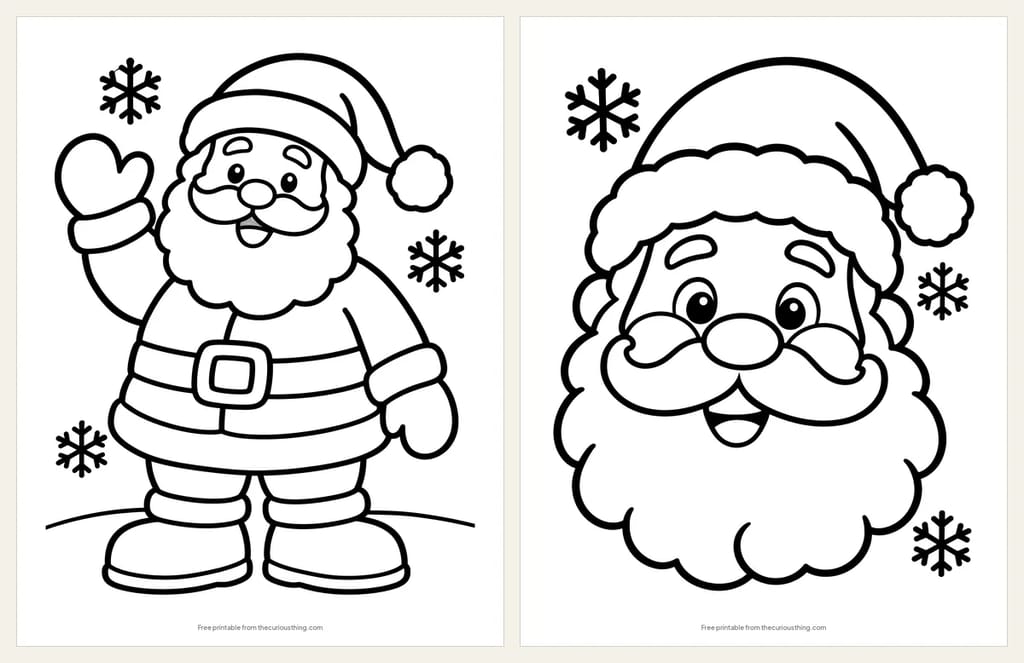
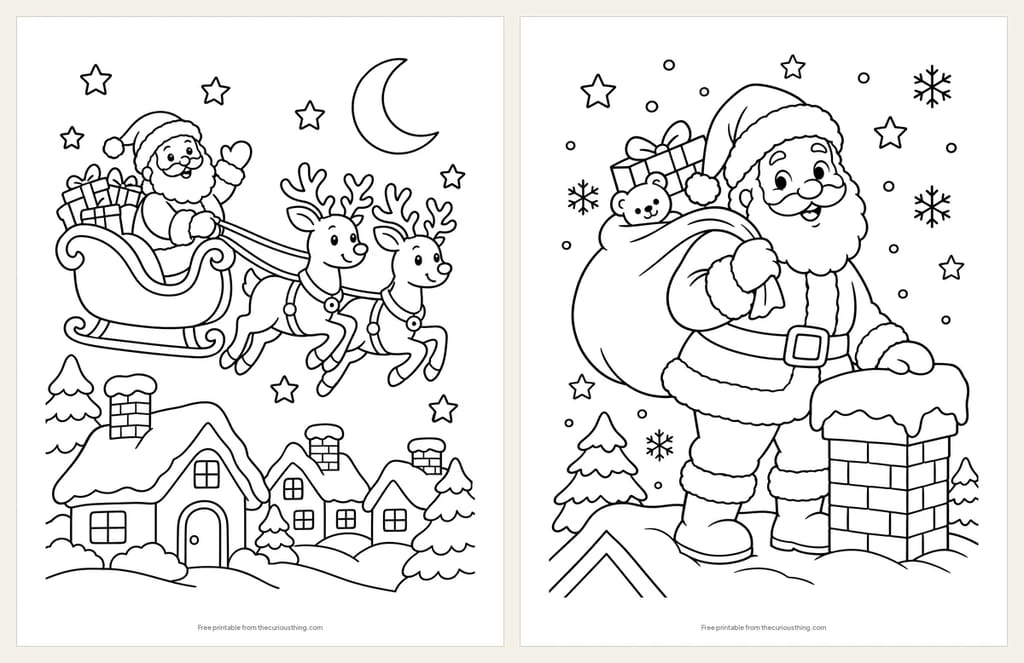
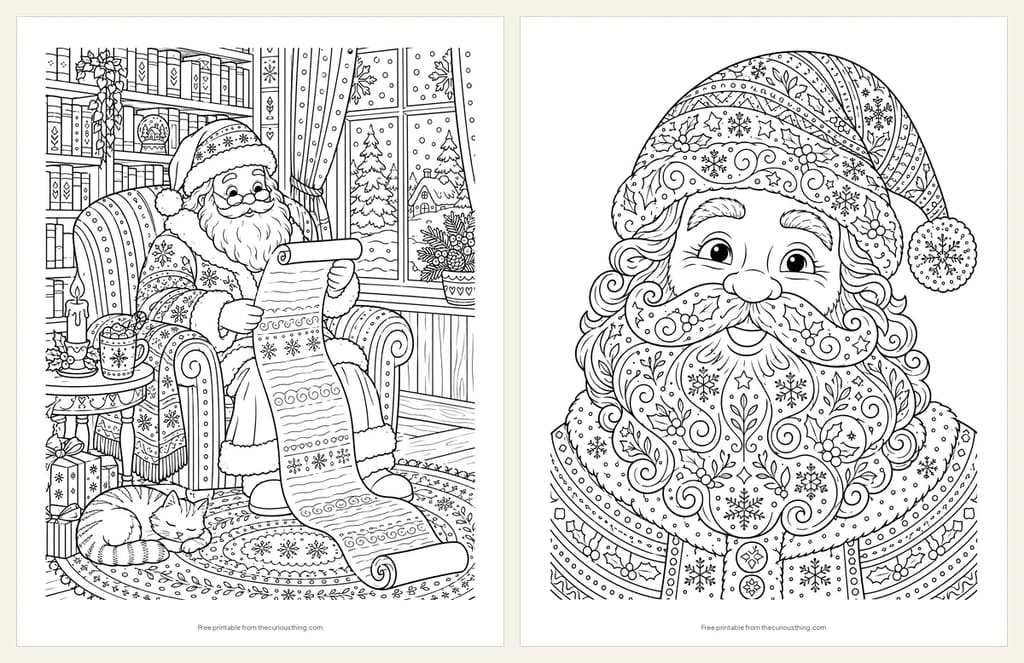
Here are six free Santa coloring pages: Santa waving and a big smiling Santa face for toddlers, Santa's sleigh over the rooftops and Santa at the chimney for ages 4 to 7, and Santa checking his list and a patterned Santa portrait for older kids and adults. Thomas Nast's first Santa for Harper's Weekly, "Santa Claus in Camp", ran on the cover of the 3 January 1863 issue, handing out gifts to Union soldiers. And Coca-Cola didn't make Santa red: Puck put a red, fur-trimmed Santa on its cover of 3 December 1902, 29 years before Haddon Sundblom's first Coca-Cola Santa in 1931.
Christmas tree coloring pages
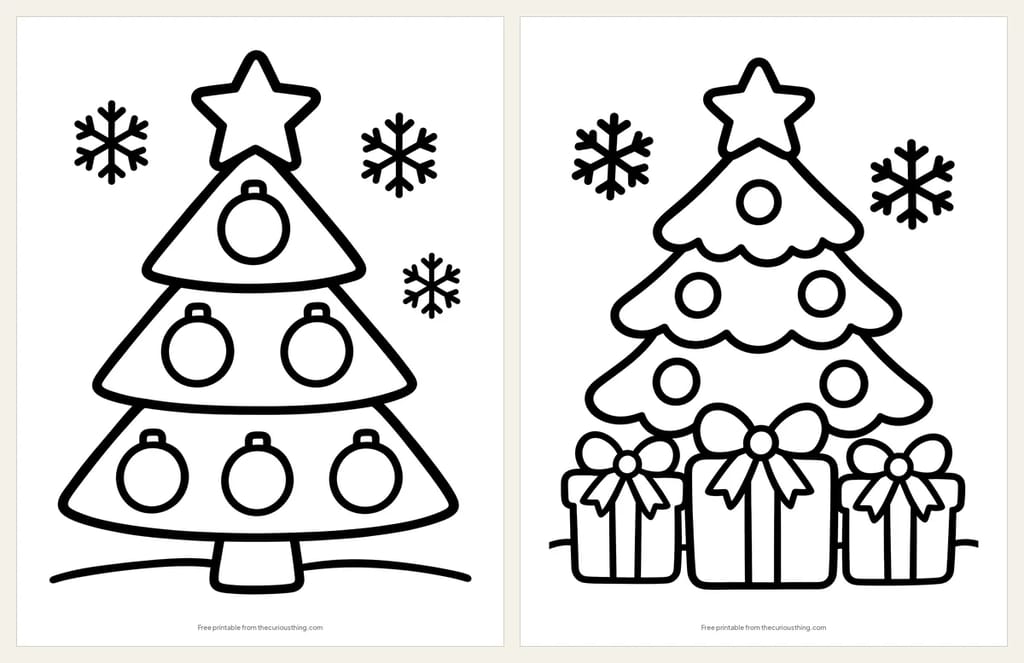
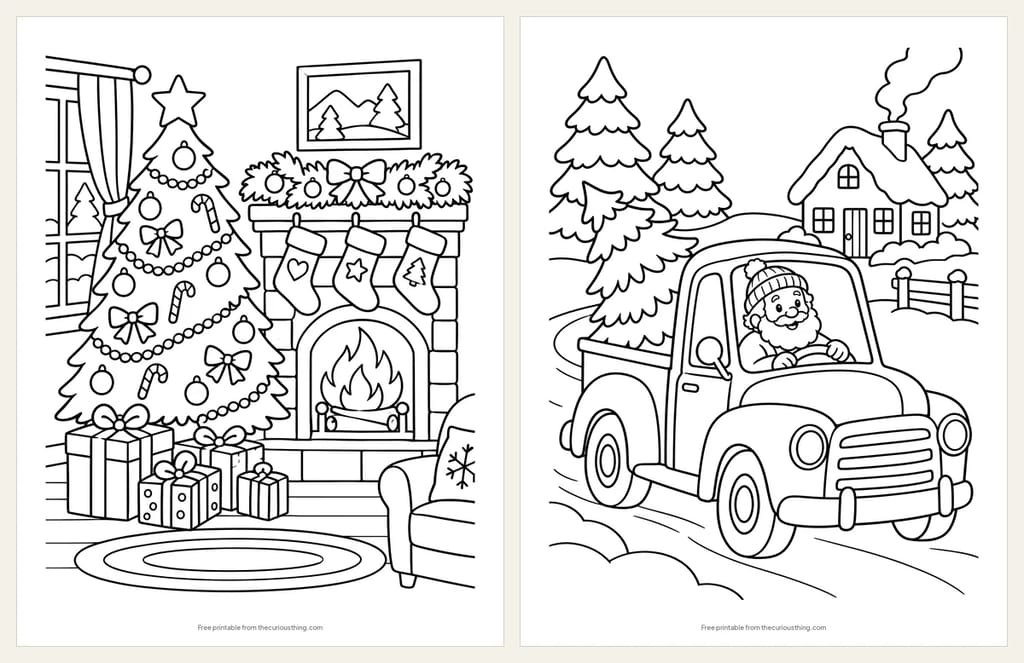
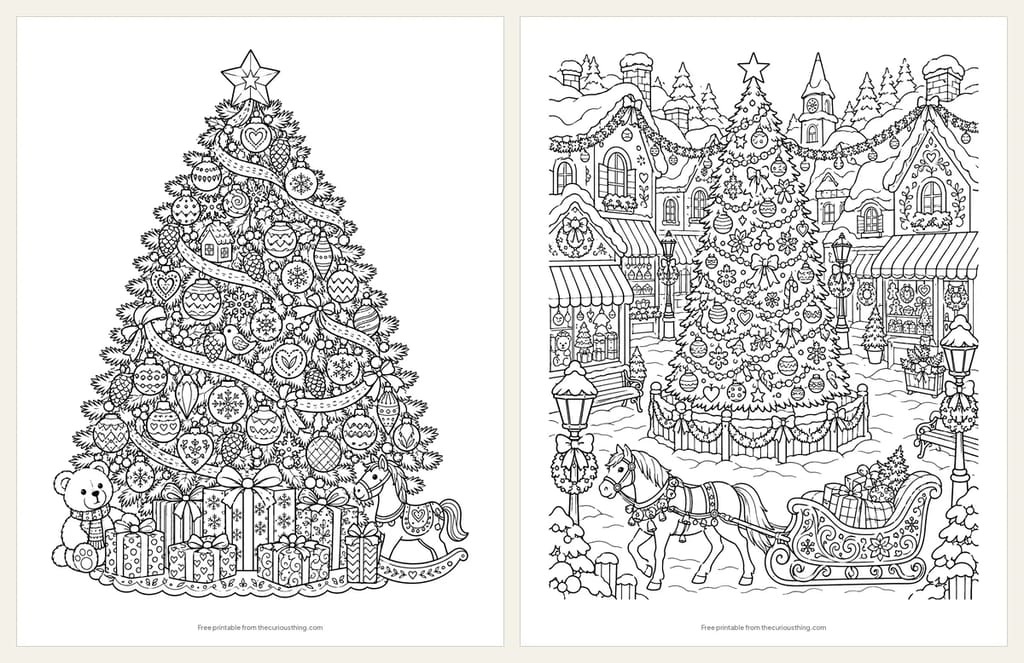
These six Christmas tree coloring pages start with a tree of three triangles and a tree with presents for toddlers, add a tree by the fireplace and a truck bringing the tree home for ages 4 to 7, and finish with a tree full of patterned ornaments and a village-square tree for older colorers. The oldest written mention of a Christmas tree, according to the town of Sélestat in Alsace, is a 1521 entry in its account book: 4 shillings paid to forest guards to watch the trees from 21 December. In December 1848 the Illustrated London News printed an engraving of Queen Victoria, Prince Albert and their children around a decorated tree at Windsor, and in 1850 Godey's Lady's Book reprinted an Americanized version for its readers. In 1882 Edward H. Johnson hand-wired 80 red, white and blue bulbs onto his tree, and it turned, too.
Reindeer coloring pages
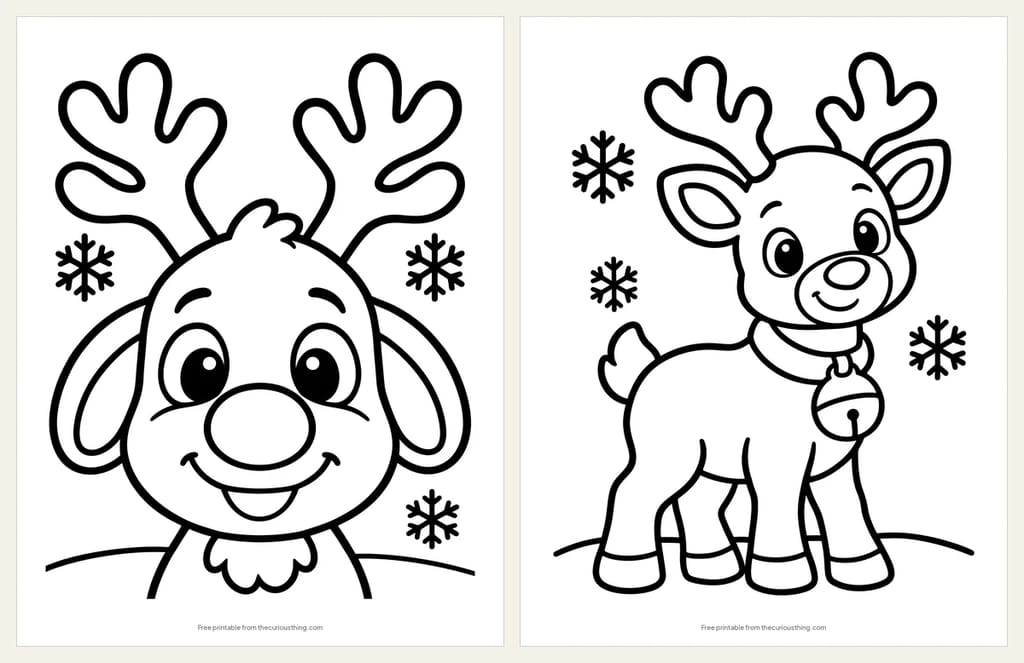
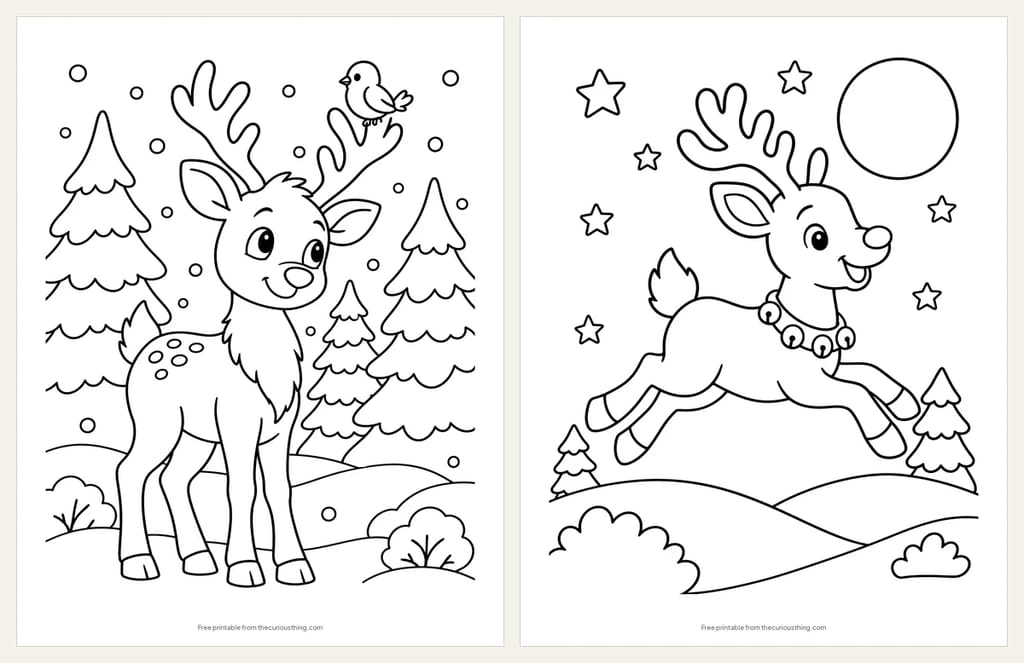
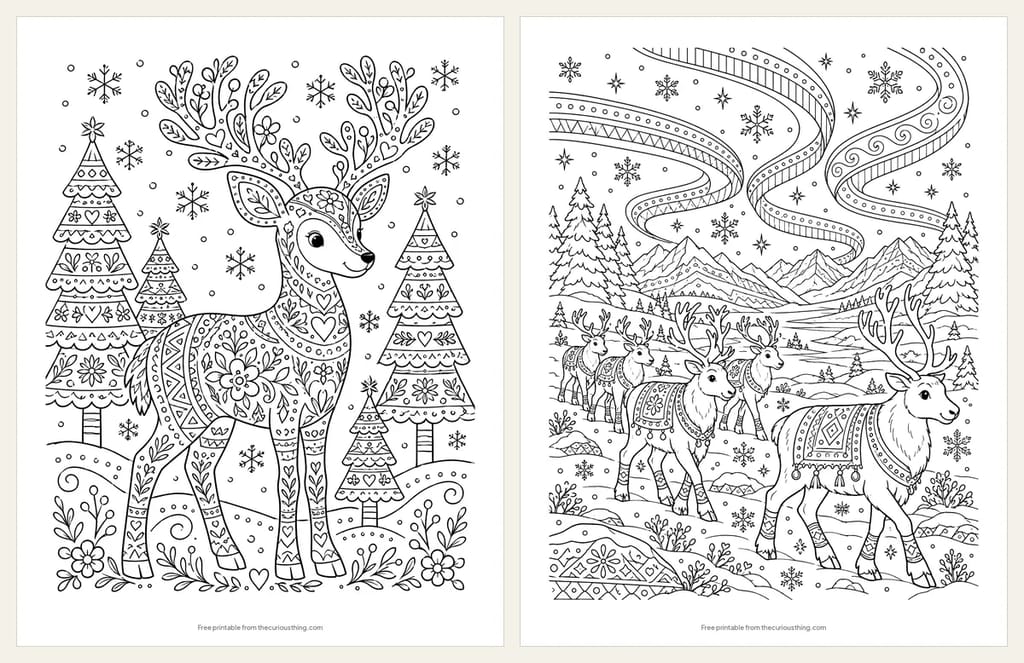
The six reindeer coloring pages are a big reindeer face and a reindeer with a bell for the youngest, a reindeer in a pine forest and one leaping over the hills for ages 4 to 7, and a folk-art reindeer and a herd under the northern lights for older kids and adults. Reindeer and caribou are the same species, and they are the only deer in which both males and females grow antlers. Grown males drop theirs in late fall, while pregnant females keep theirs through the winter until their calves are born in spring, so a reindeer with antlers on Christmas Eve may well be a girl. Santa's reindeer first appeared in an 1821 booklet, two years before "A Visit from St. Nicholas" named eight of them in 1823. In that first printing the last two were Dunder and Blixem.
Gingerbread man coloring pages
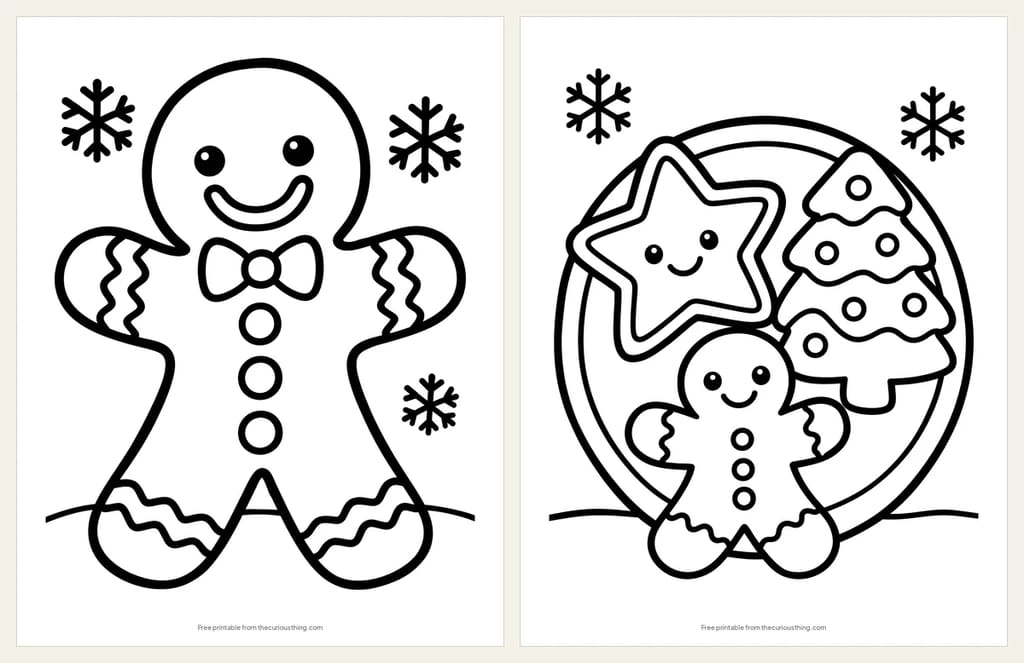
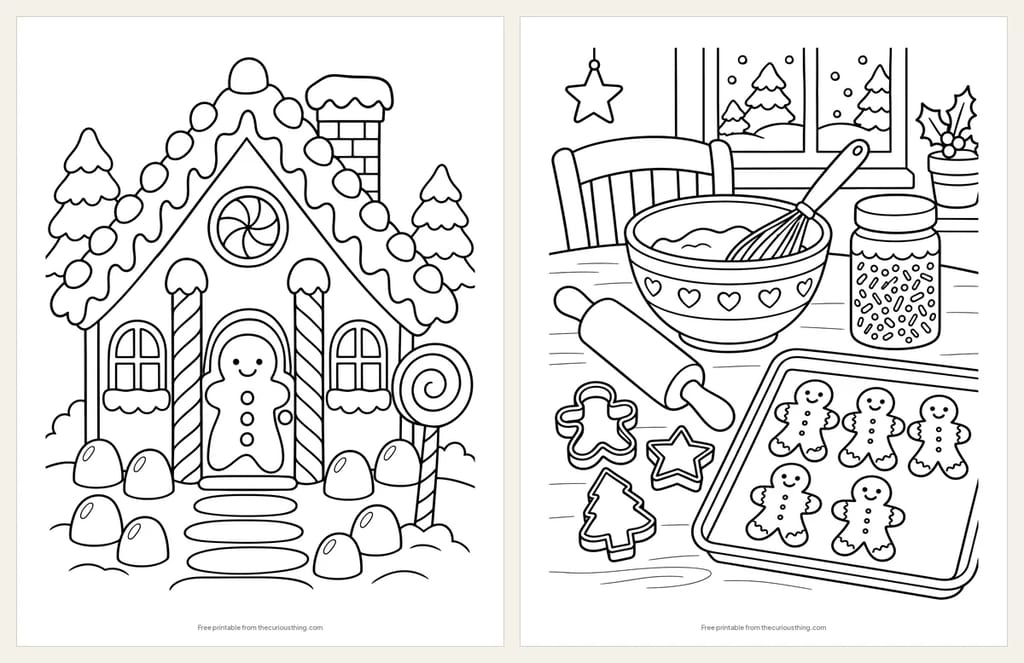
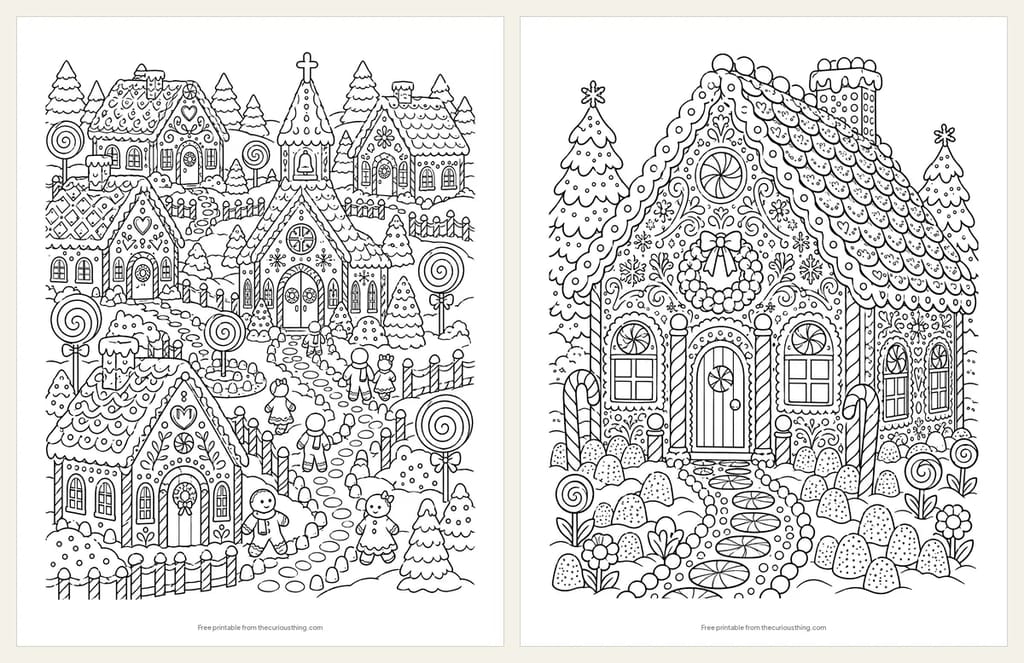
There are six gingerbread coloring pages here: a gingerbread man and a plate of three cookies for toddlers, a gingerbread house and a baking-day table for ages 4 to 7, and a whole gingerbread village and a fancy iced house for older kids and adults. The earliest known printing of the gingerbread man's story is "The Gingerbread Boy" in St. Nicholas magazine in May 1875, and his boast there was "I can run away from you, I can!" The "run, run, as fast as you can" chant came later. The witch's house in Hansel and Gretel wasn't gingerbread to begin with: in the Grimms' 1812 text it is built of bread, roofed with cake, with windows of clear sugar. Gingerbread people are older than both. English Heritage says Elizabeth I served her guests gingerbread likenesses of themselves, though the Tudor historian John Guy says he knows of no solid evidence for it.
Elf coloring pages
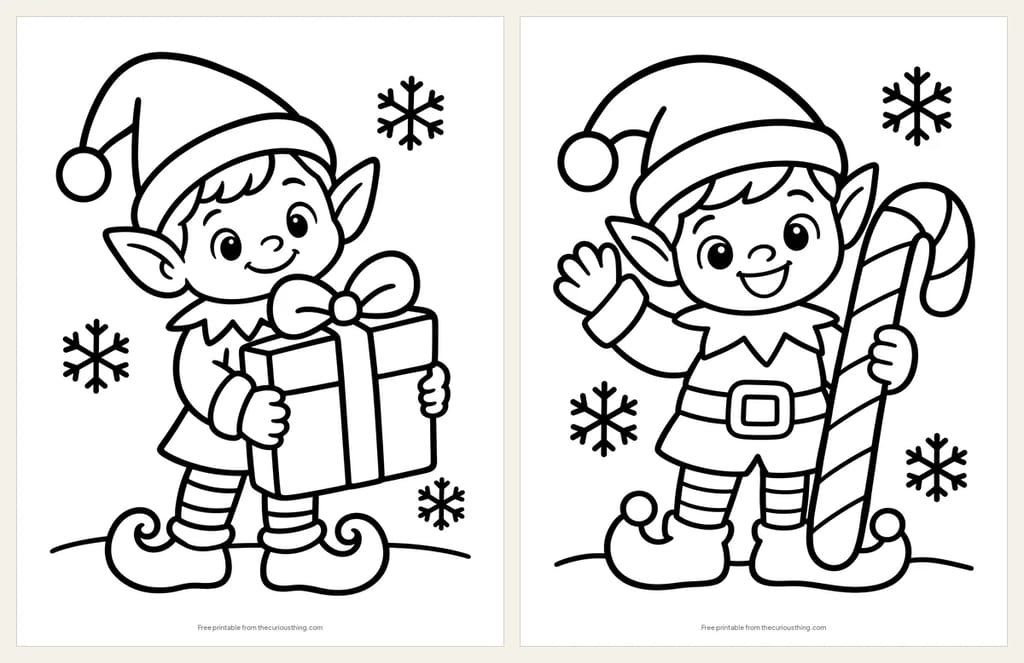
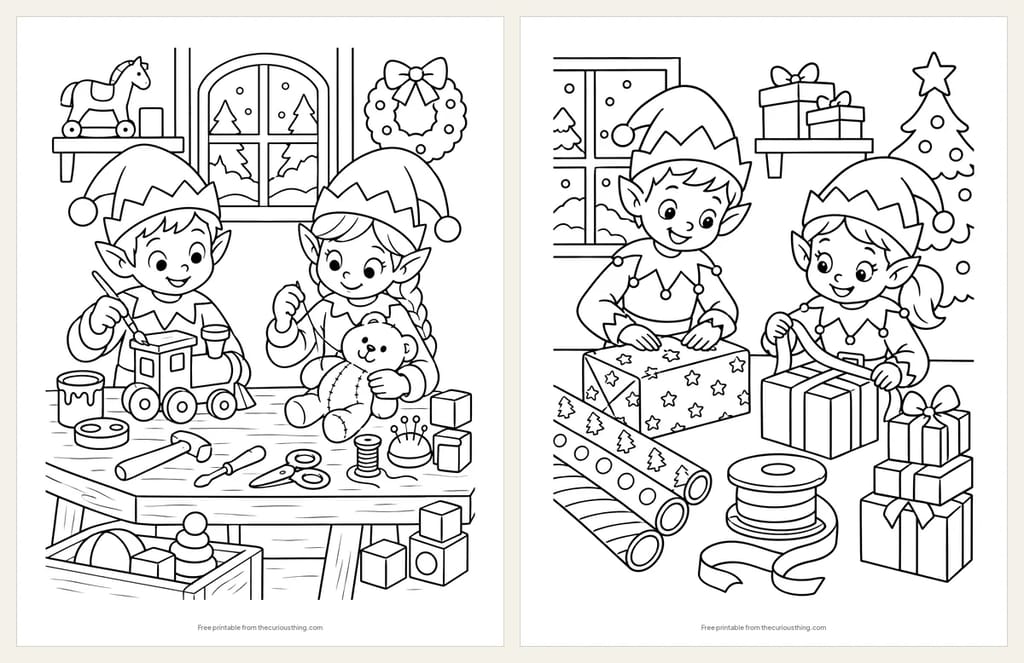
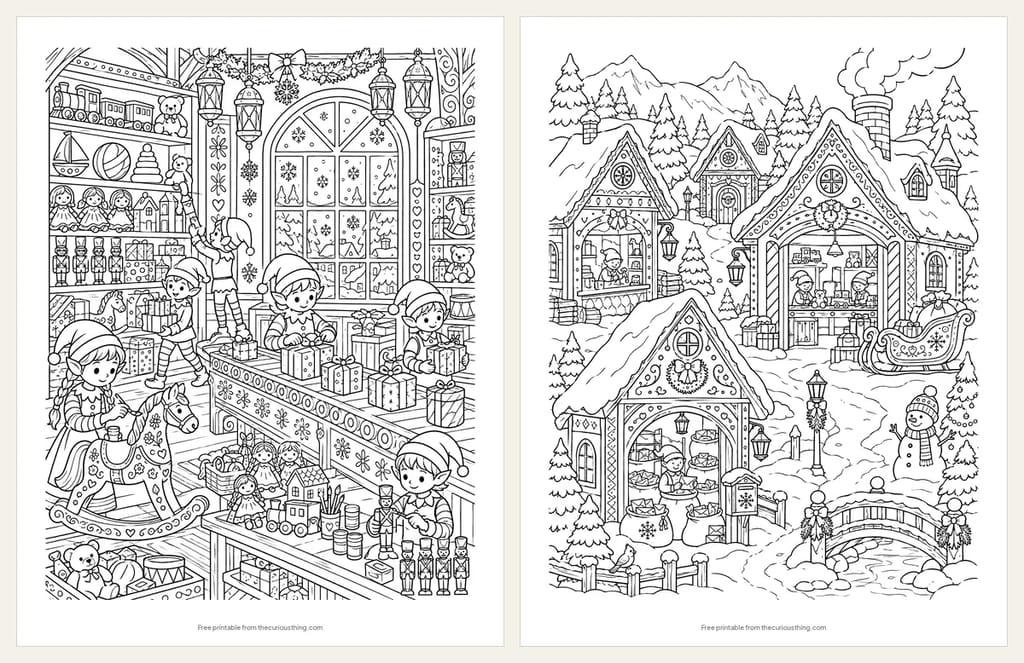
The elf coloring pages are an elf with a present and an elf with a candy cane for the youngest, elves making toys and elves wrapping presents for ages 4 to 7, and a busy toy workshop and a North Pole village for older colorers. Santa's elves were already at work in 1857. A poem in Harper's Weekly on 26 December that year, "The Wonders of Santa Claus", says he "keeps a great many elves at work" making "cakes, sugar-plums, and toys". The elves on these pages are storybook helpers in pointy hats and curled shoes. If your elf needs a name to go with the picture, our list of Christmas elf names has the folklore behind each one.
Can you turn your child into a Christmas coloring page?
Yes. Our free photo-to-coloring-page tool redraws one photo of your child as a coloring page in the Christmas Village world, with their face kept and a tree, stockings and presents around them in black outlines. It takes about 20 seconds, needs no account or email, and downloads as a US Letter PDF to print at 100%. The photo is sent once to draw the page and isn't stored, and nothing is used to train AI. It works for a pet or a whole family photo too.
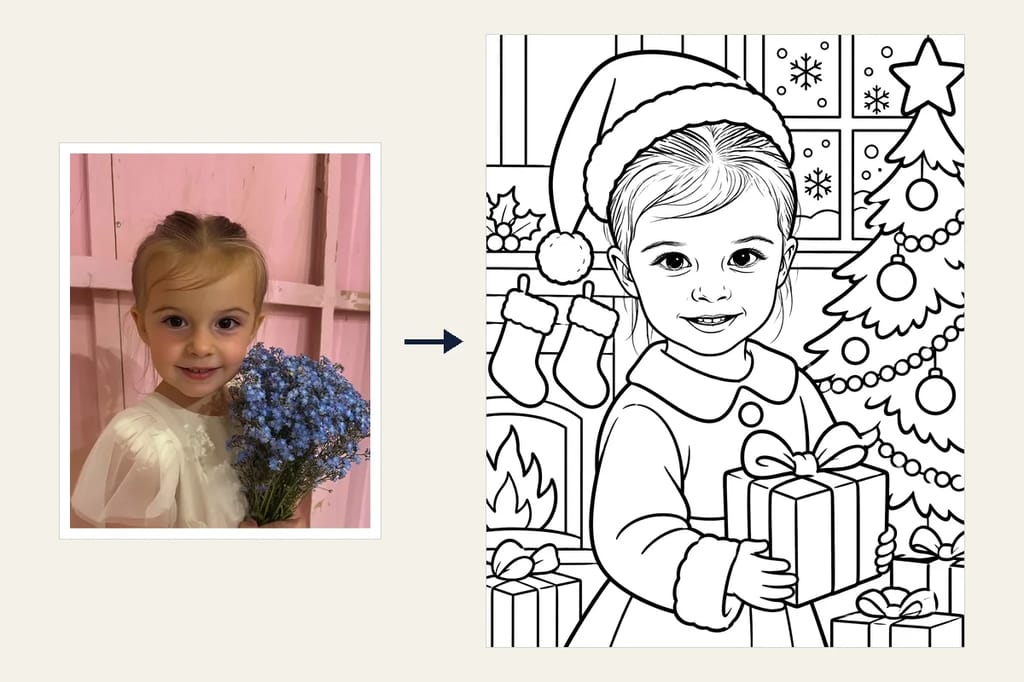
Make one for each child, then print an extra for the grandparents and slip it in with the Christmas card.
Snowman and winter coloring pages
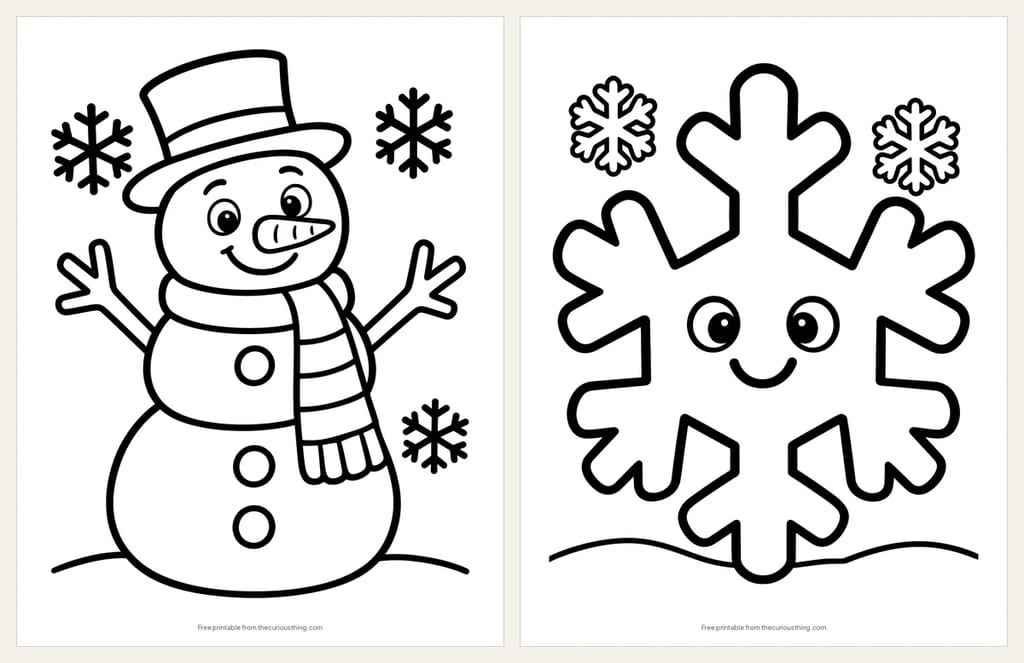
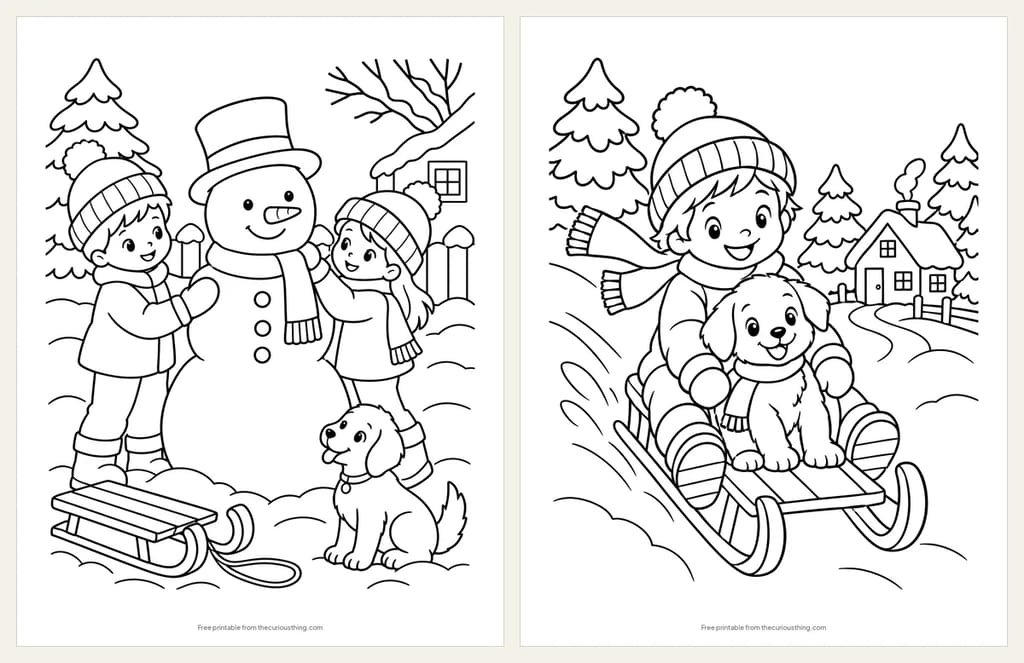
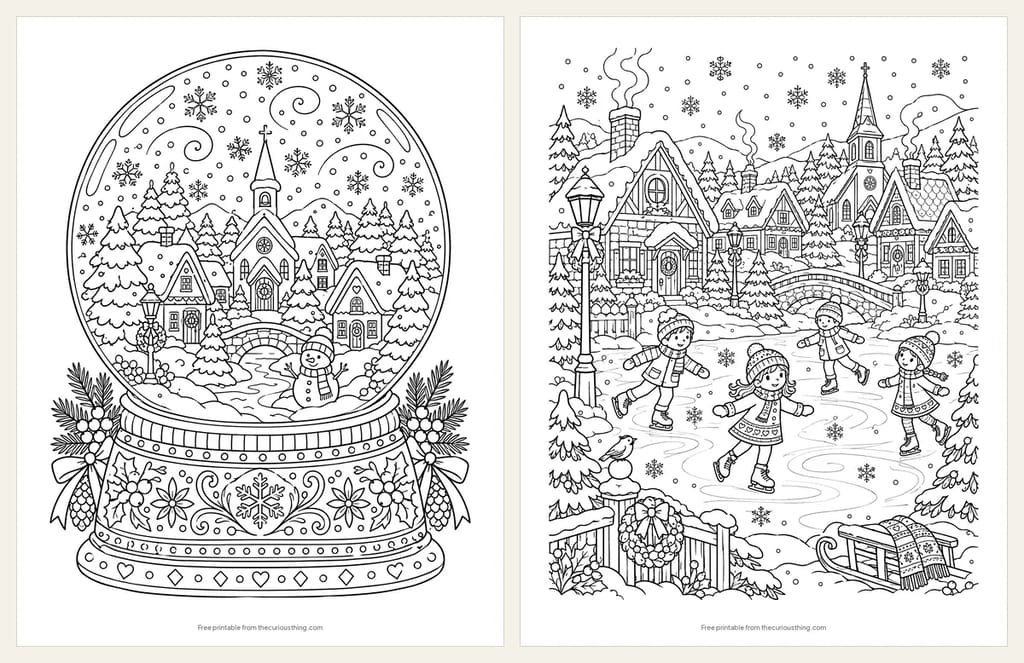
The six snowman and winter coloring pages are a snowman and one big snowflake for toddlers, children building a snowman and a sledding run for ages 4 to 7, and a snow globe village and a skating pond for older kids and adults. The oldest known picture of a snowman is a doodle in the margin of a prayer book made around 1380 to 1390, now in the national library of the Netherlands: a snowman in a hat, sitting over a pot of fire. In January 1511, Brussels filled with about 110 snow figures, and the city's poet, Jan Smeken, wrote a 408-line poem about them. Michelangelo made one too, of a sort: Vasari writes that one snowy winter in Florence, Piero de' Medici had the young sculptor make "a statue of snow, which was very beautiful".
Winter animal coloring pages
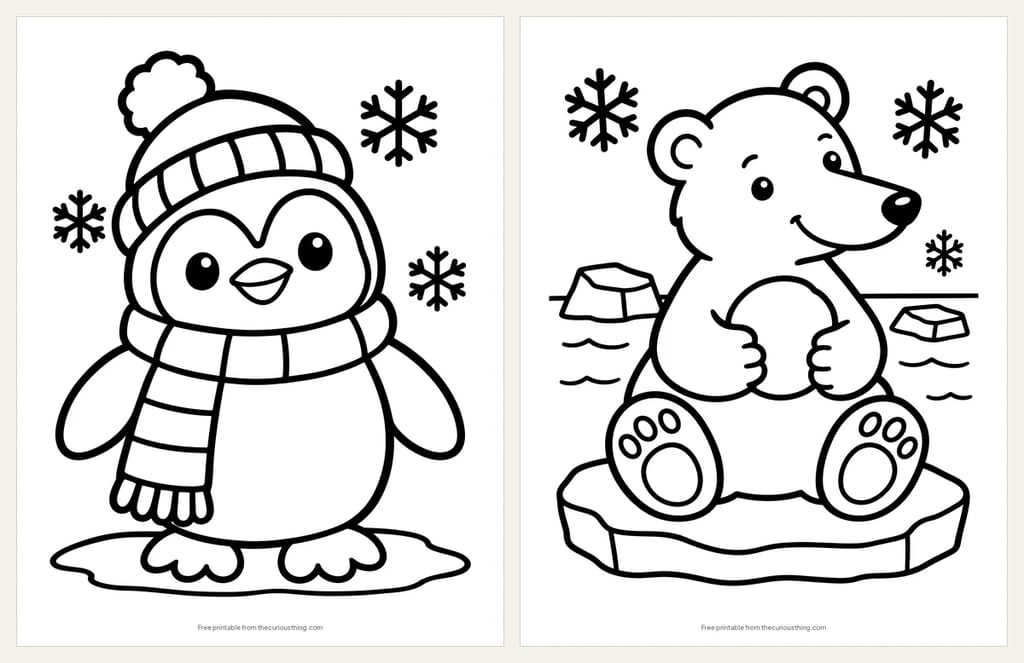
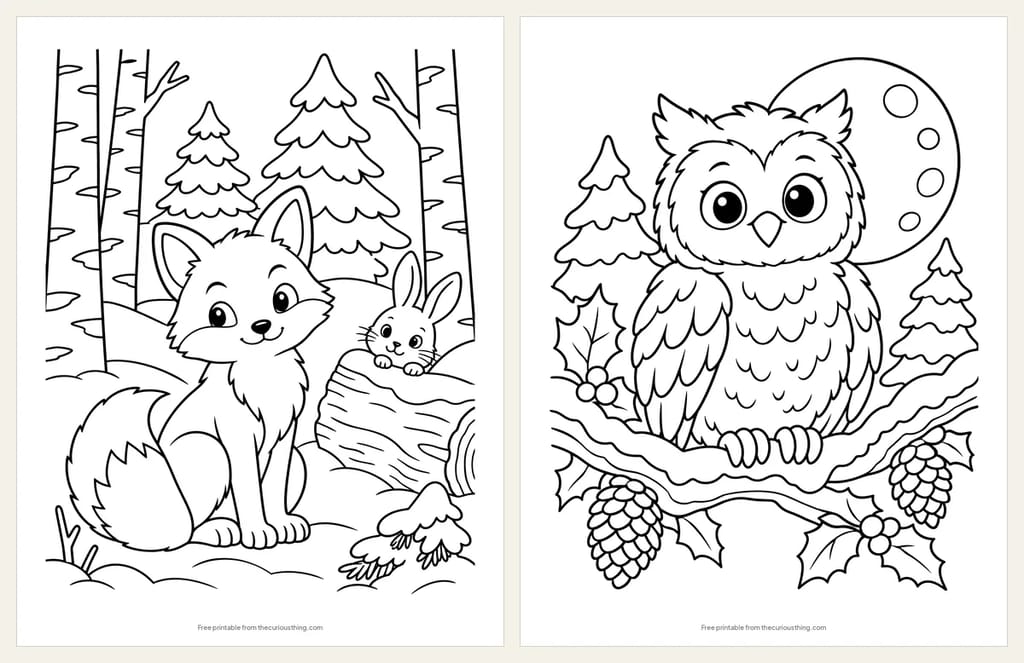
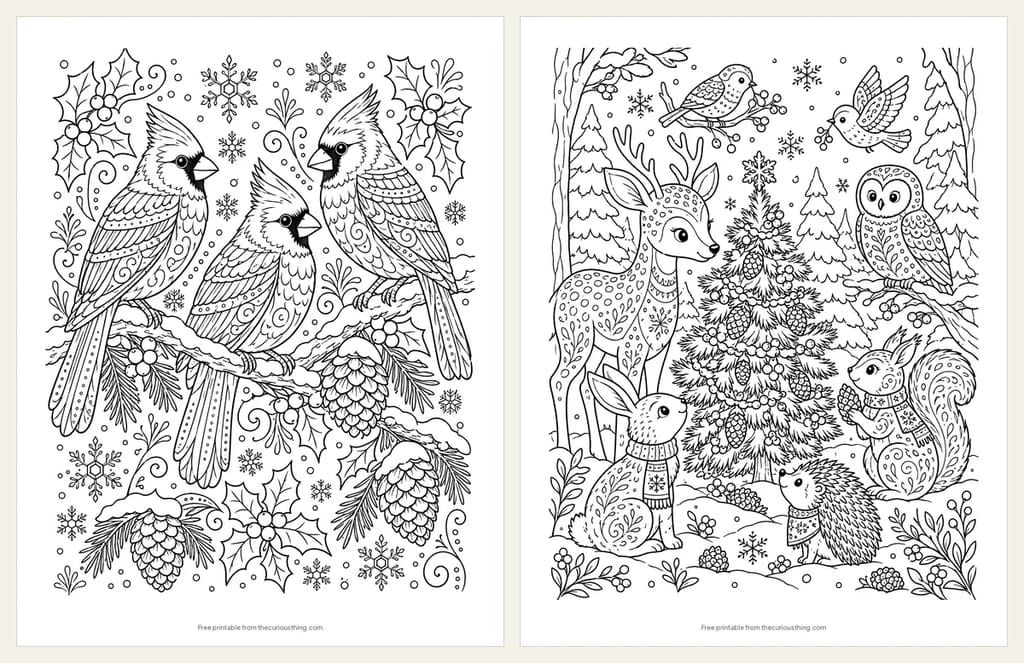
Here are six winter animal coloring pages: a penguin in a scarf and a polar bear cub for toddlers, a fox in the snowy woods and an owl on a branch for ages 4 to 7, and cardinals on a winter branch and woodland animals around their own tree for older colorers. The penguin and the polar bear share this section but never a coastline: polar bears live only around the North Pole and penguins only in the Southern Hemisphere, so outside a zoo they never meet. Even in the south, only emperor and Adélie penguins live on Antarctica year-round. Holly makes a good page but a poor snack: only female holly plants grow berries, and the berries can make children and pets sick with vomiting and diarrhea, so keep real sprigs up high.
Nativity coloring pages
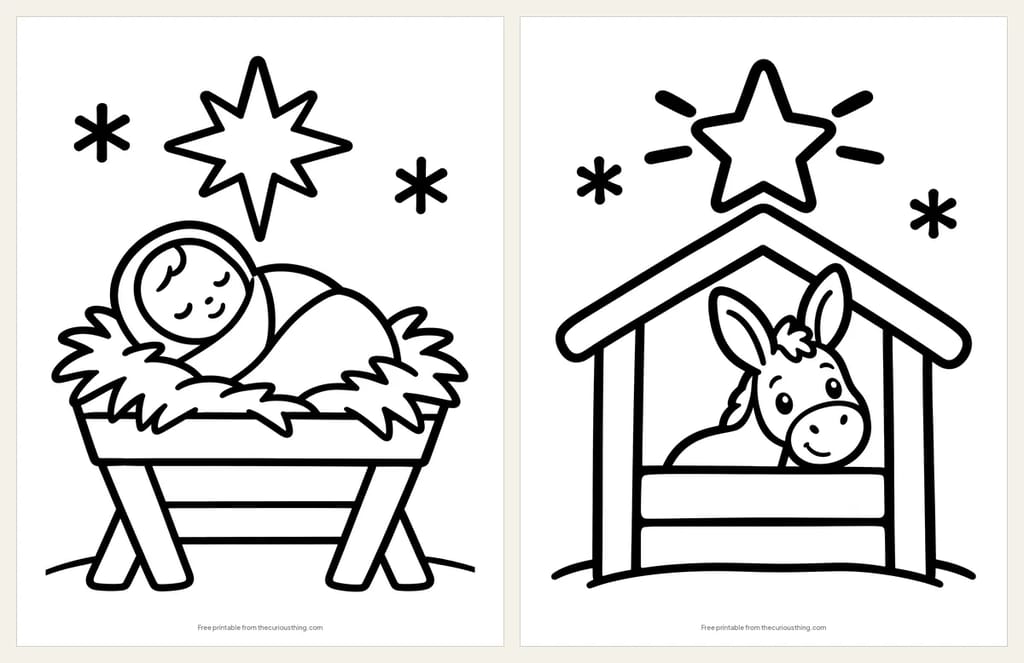
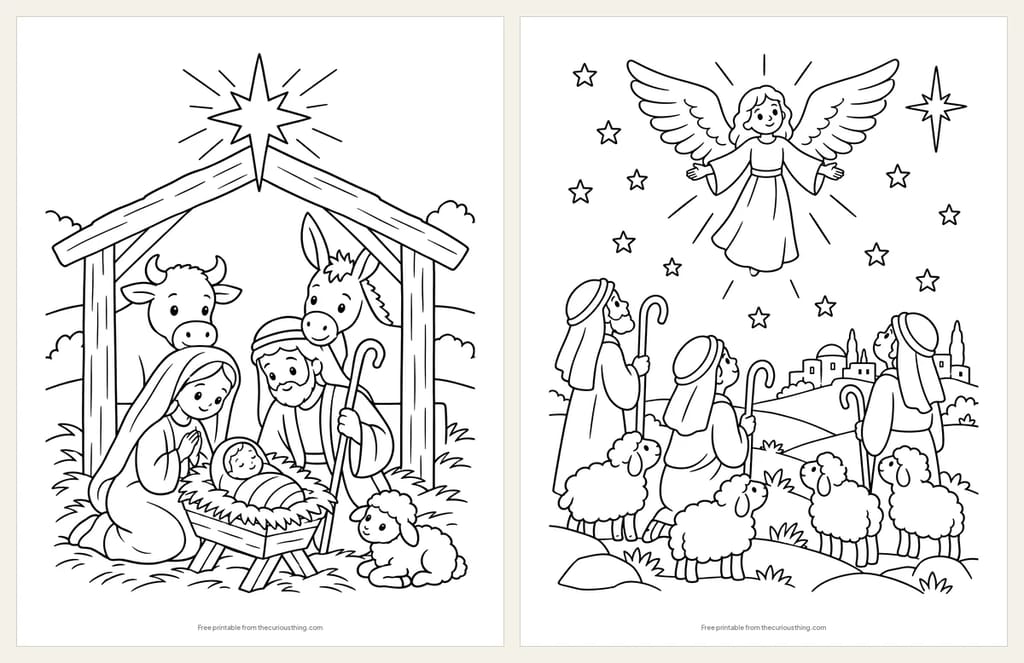
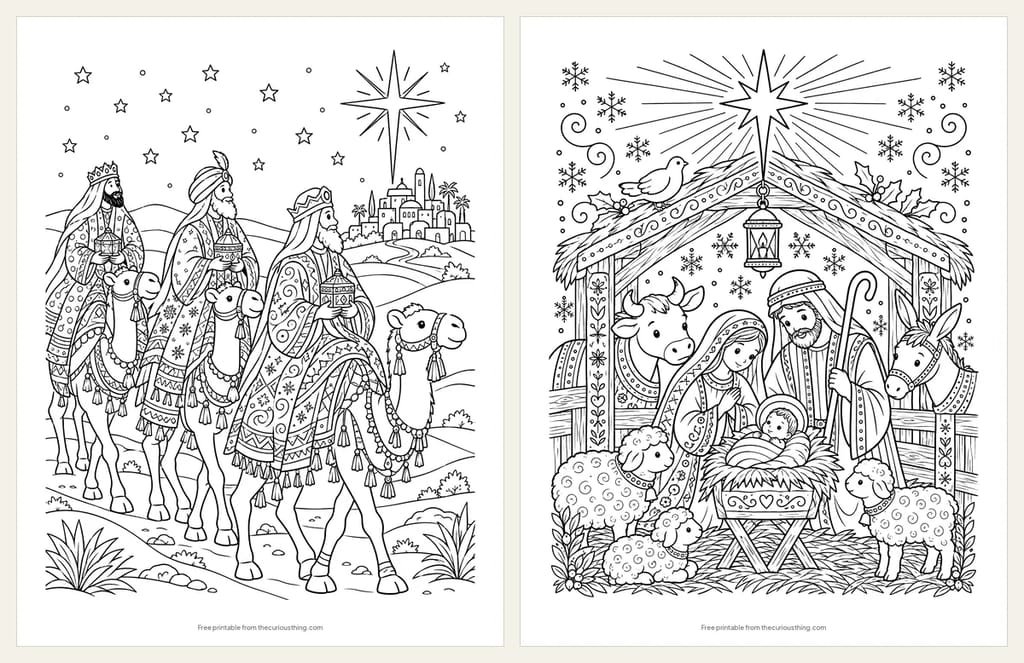
The six nativity coloring pages are a baby in the manger and a stable under the star for toddlers, the nativity and the shepherds with the angel for ages 4 to 7, and the wise men following the star and a detailed stable scene for older kids and adults. The first nativity scene was a living one. At Christmas 1223, in the Italian village of Greccio, St Francis of Assisi had a manger set up with hay, a real ox and a donkey, and people acted the scene out. Those two animals come from tradition rather than the Gospels: Luke's account mentions only the manger. Matthew calls the visitors magi from the east and never says there were three, which is why our wise men page is a picture to talk about as well as color.
Ornament, stocking and present coloring pages
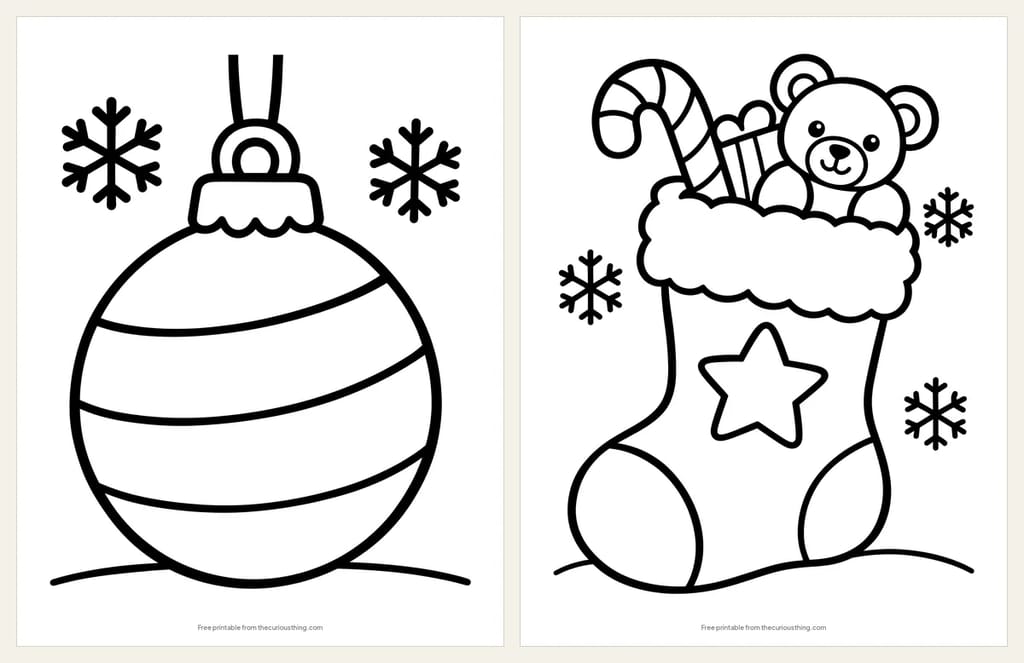
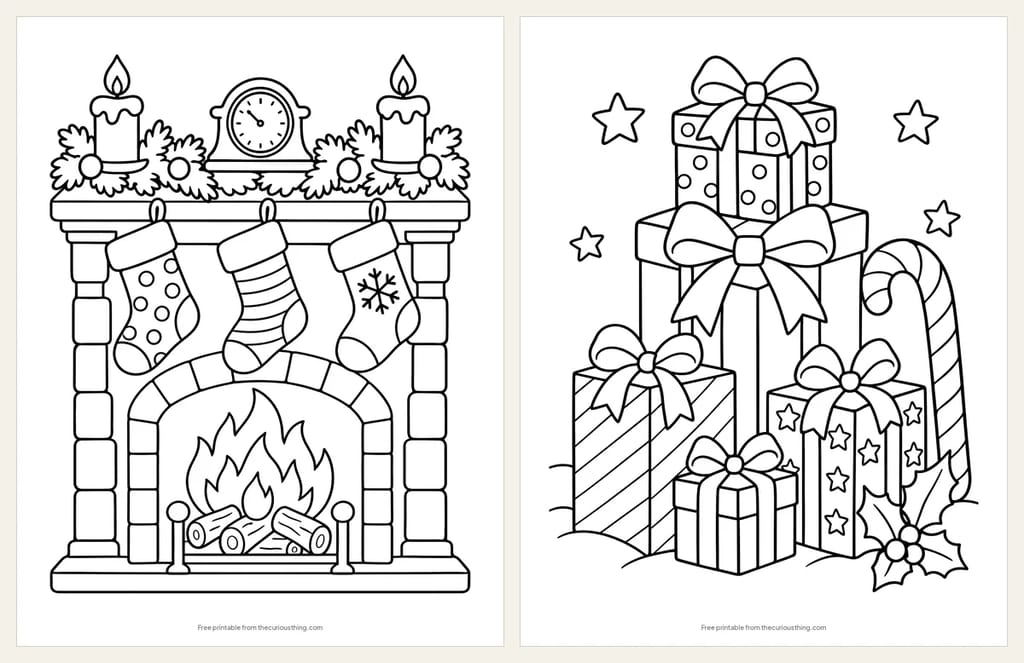
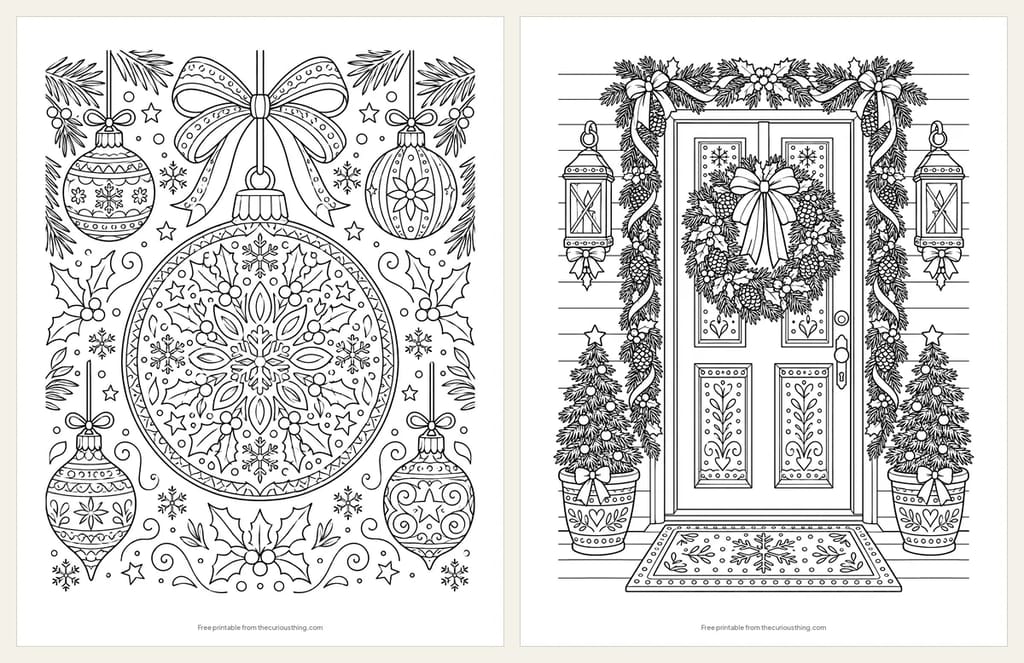
The last six are one big ornament and one stocking for toddlers, stockings on the mantel and a pile of presents for ages 4 to 7, and a mandala ornament and a decorated front door for older kids and adults. Blown-glass ornaments trace back to Lauscha, a glassblowing town in Germany, which says its craftsmen made the first glass fruits and nuts for Christmas trees in 1847. Stockings are in the 1823 poem ("The stockings were hung by the chimney with care"), and the idea may go back to a much older story: the oldest surviving full life of St Nicholas, written centuries after his death, tells how he secretly threw bags of gold through a poor man's window on three nights so the man's daughters could marry. It is a legend, and in it the gold lands in the house, not in a stocking.
What should children color with?
Ordinary crayons and colored pencils; a fatter tool doesn't make coloring neater. Jumbo crayons are sold for toddlers, but in a 2000 study of 60 children aged 3 to 5, thicker drawing tools led to less mature grips and no more accurate drawing. The same Welsh health board's therapists note that sharpened pencils give more accuracy than crayons, so the detailed pages work best with colored pencils or fine markers.
For safety, look for the ACMI AP Seal, which certifies that a product contains nothing "in sufficient quantities to be toxic or injurious to humans, including children". The "Conforms to ASTM D-4236" line on a box means something different: every art material sold in the US must carry it, hazardous or not, to show the product has been assessed for long-term health hazards and labeled to match. Crayons are exempt from the US small-parts rule for toys meant for under-3s, so broken crayon ends need picking up, and the AAP lists pen and marker caps among choking hazards.
Does coloring calm children down?
A little, for a short while, going by the research, much of which tested college students. In a 2005 study, Curry and Kasser made 84 students anxious, then had them color for 20 minutes: a mandala and a plaid pattern both lowered anxiety more than a blank page. A meta-analysis of 8 trials with 578 adults found mandalas did no better than free drawing.
For children the evidence is thinner. In a study of 52 children with an average age of about 11, anxiety before a spelling test fell after both mandala coloring and free coloring, but there was no group that didn't color to compare against. A review of 10 trials with 816 children aged 5 to 12 found drawing and art lowered short-term anxiety, mostly during medical care, with results so varied the authors say the evidence "does not support a single generalisable effect". So a page on Christmas Eve is a fine way to sit together, but don't count on it to settle a child who is wide awake waiting for Santa.
Frequently asked questions
Are these Christmas coloring pages free?
+
Yes. All 54 are free to print, with no email, account or sign-up. Tap a page's title to open the full-size file, then print it. You can print as many as you like for home or a classroom; please don't sell them.
What age are Christmas coloring pages for?
+
Every subject here comes at three levels. Easy pages, one big shape in thick lines, suit ages 2 to 4. Medium pages, a simple scene in bold lines, suit ages 4 to 7. Detailed pages, full of small patterned spaces, suit ages 8 to adult. Treat the ages as a starting point and let your child pick.
How do I print a coloring page so it fits the paper?
+
The pages are sized for US Letter (8.5 by 11 inches) at 300 dpi. On Letter paper, print at 100% or Actual size. On A4 paper, choose Fit, which shrinks the page slightly so nothing is cut off.
What paper is best for coloring pages?
+
Plain 20 lb copy paper is fine for crayons and colored pencils. For markers or paint, use 65 lb cover cardstock if your printer can feed it, and put a scrap sheet underneath in case the ink bleeds through.
Are there religious Christmas coloring pages here?
+
Yes. The nativity section has six pages: a baby in the manger, the stable under the star, Mary and Joseph with baby Jesus, the shepherds and the angel, the wise men following the star, and a detailed stable scene.
Can I make a Christmas coloring page of my child?
+
Yes. Our free photo-to-coloring-page tool redraws one photo of your child, your pet or your whole family as a coloring page in the Christmas Village world, with their face kept. It takes about 20 seconds, needs no email, and the photo isn't stored.
What can we do with the finished pages?
+
Fold one into a card for a grandparent (our Christmas card messages have lines to write inside), cut the ornaments and stockings out as gift tags, use a stack as placemats at the children's table, or tape the finished pages to a window.
Make them a whole coloring book
One photo of your child, your pet or the family, drawn into 24 worlds and printed as an 8.5 by 11 inch softcover for $34. See the cover and two pages free first, and approve every page before anything prints. Allow two to three weeks, so order by the start of December for Christmas.