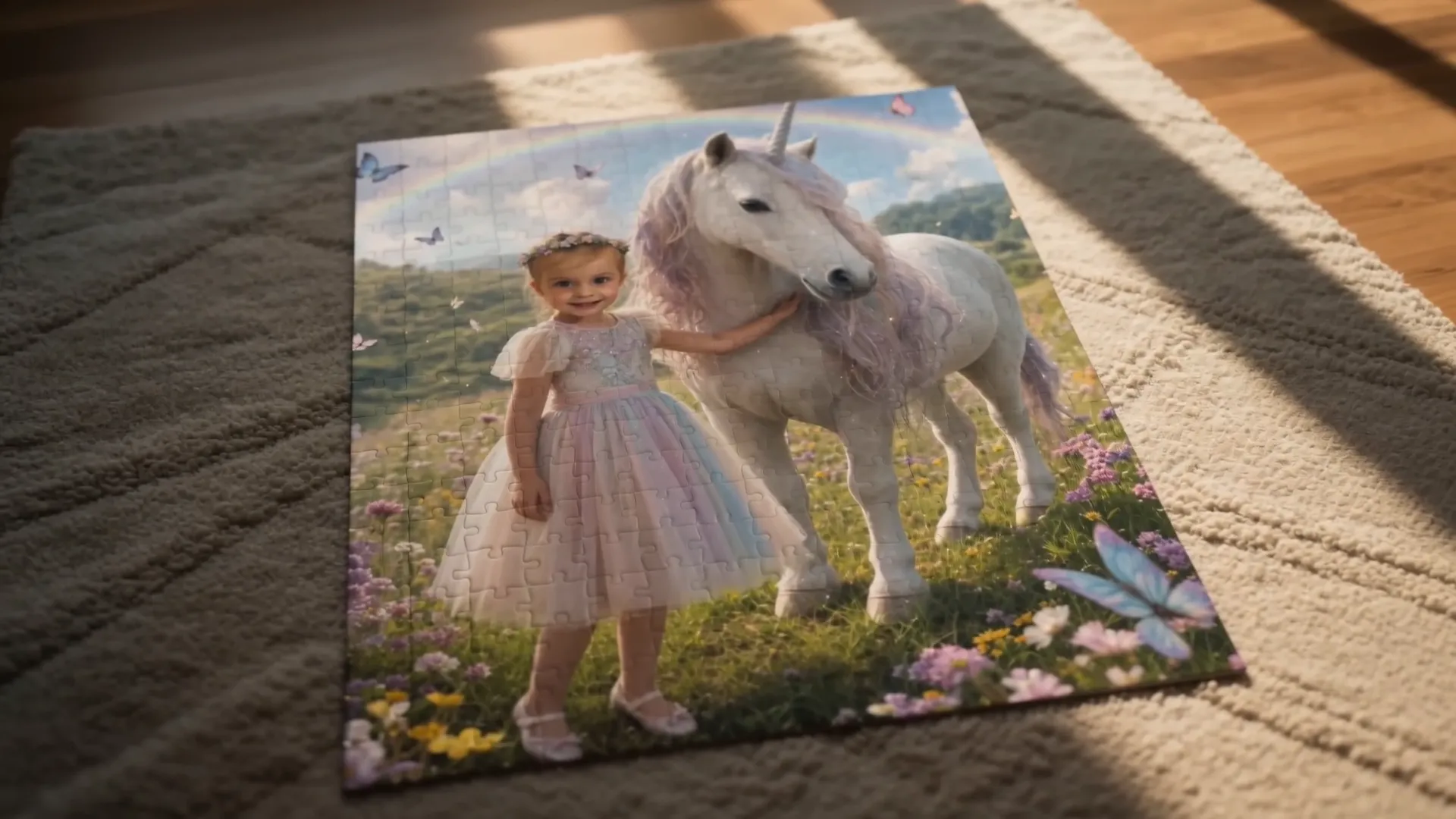
Puzzles look simple, a handful of pieces and a picture, but for a developing brain, completing one is a surprisingly rich workout. There is a real reason puzzles are so good for child development, and a growing body of research to back it up. Here is the short version of what puzzles do for kids, then the detail and the honest limits of the evidence.
The short answer
Puzzles help kids build spatial reasoning (the kind linked to math), fine motor skills, problem-solving, focus, and confidence, and they do it through calm, screen-free play. The research shows consistent associations and short-to-medium-term gains, so think of a puzzle as a genuinely enriching support for learning rather than a guaranteed shortcut.
- Builds spatial reasoning linked to math and STEM
- Strengthens fine motor skills and hand-eye coordination
- Develops problem-solving and logical thinking
- Grows focus, patience, and persistence
- Expands spatial vocabulary through shared play
- Boosts confidence with a clear "I did it" reward
1. Stronger spatial reasoning (the skill linked to math)
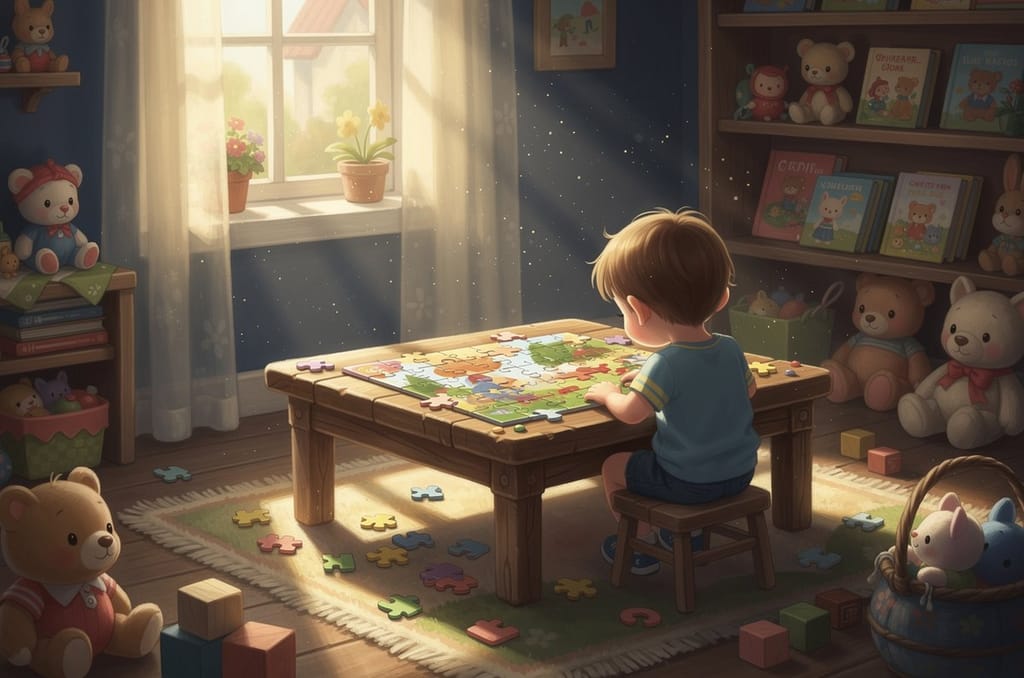
The biggest benefit of puzzle play is spatial reasoning, and it has the strongest research behind it. Every time a child turns a piece in their mind to see whether it fits, they are practicing mental rotation and spatial visualization, the same skills used to read a map or picture how shapes connect. In a well-known University of Chicago study, preschoolers who played with puzzles at home later performed better on a spatial-transformation task than children who did not, even after researchers accounted for family income, parent education, and how much parents talked. Other work has linked strong early spatial skills to better math ability years later, which is why puzzles are often called quiet groundwork for STEM. Of all the benefits here, this is the clearest and best supported, and it is the reason a basket of puzzles earns its place.
2. Sharper fine motor skills
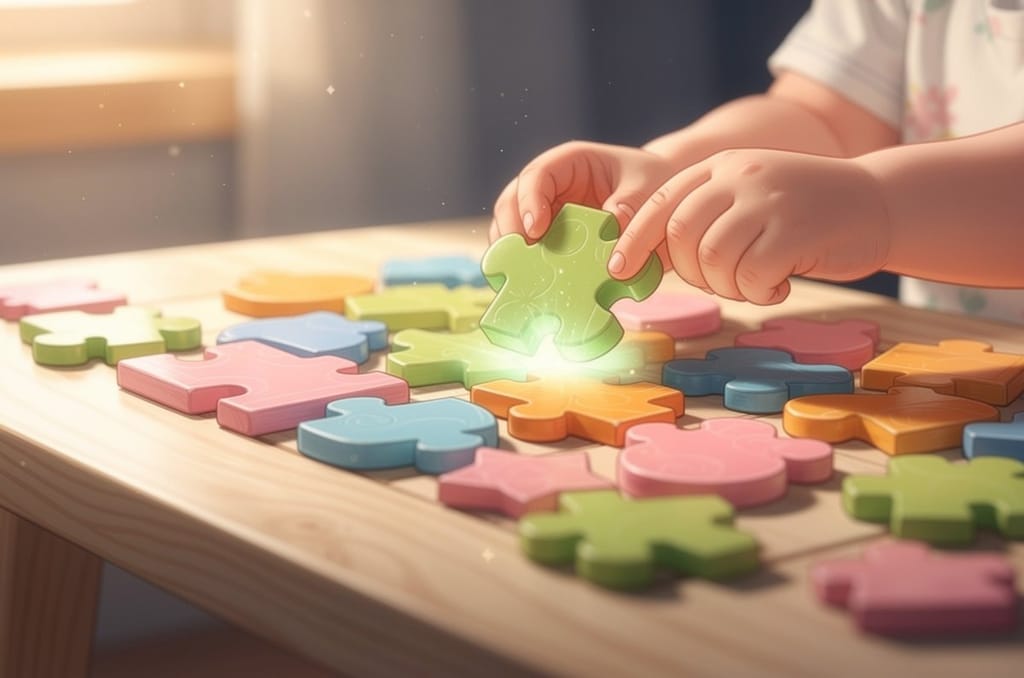
Puzzles are a favorite tool of occupational therapists because they build fine motor skills so directly. Picking up a piece, rotating it, and pressing it into place takes a precise pincer grip and steady hand-eye coordination, the same control a child needs for holding a pencil, using scissors, buttoning a coat, and getting dressed. The chunky pieces in a kids puzzle are sized for small hands on purpose, so a toddler can grasp and place them without frustration. Several studies of preschoolers have found that regular puzzle play measurably improves fine motor development. Because the feedback is physical and immediate, a piece either seats with a satisfying click or it does not, children naturally repeat the motion and refine it. That repetition, a little every day, is where the hand strength and dexterity quietly accumulate.
3. Problem-solving and logical thinking
A puzzle is a small, self-correcting problem, and solving it teaches the basics of logical thinking. A piece either fits or it does not, and the feedback is instant, so a child learns to form a simple plan, test it, and adjust without an adult having to mark anything right or wrong. They start to sort by color and shape, group the edge pieces, and reason from the picture on the box to where a piece must go. That loop of try, check, and revise is the same one behind early math and science thinking. Studies using structured puzzle play have shown measurable gains in young children's cognitive and logical-mathematical development. Better still, the difficulty is self-scaling: as a child improves, you simply hand them a puzzle with more pieces, and the same problem-solving muscles get a slightly heavier lift.
4. Focus, patience, and persistence
Finishing a puzzle asks a child to hold their attention on one task, tolerate a little frustration, and keep going to a clear goal, which is exactly the kind of focus that is hard to build with fast, passive entertainment. A jigsaw cannot be rushed or skipped to the end, so it rewards sustained attention and stick-with-it-ness in a way a swipe-based screen rarely does. The goal is visible the whole time, the finished picture, and the satisfying click of the last piece is a real, earned reward for the effort. Parents often notice that a child who flits between toys will sit unusually still for a puzzle pitched at the right level. Choose one a child can finish with a little effort, not none and not so much that they give up, and you build patience one piece at a time.
5. Language and "puzzle talk"
One of the most valuable parts of a puzzle is the conversation that happens around it. When an adult plays alongside a child, they naturally use spatial words, edge, corner, flip, turn, between, under, upside down, and researchers have found that this "puzzle talk" is part of what makes the activity so good for spatial development. The puzzle gives you a concrete reason to use those words and the child a concrete reason to learn them, because the meaning is right there in their hands. The takeaway is simple: sit and narrate it together rather than handing it over and walking away. Ask "which piece has a straight edge?" or "can you flip that one?" and you turn quiet play into a rich language lesson. Picking a picture your child loves keeps them at the table long enough for all that talk to land.
6. Confidence and a calm, screen-free moment
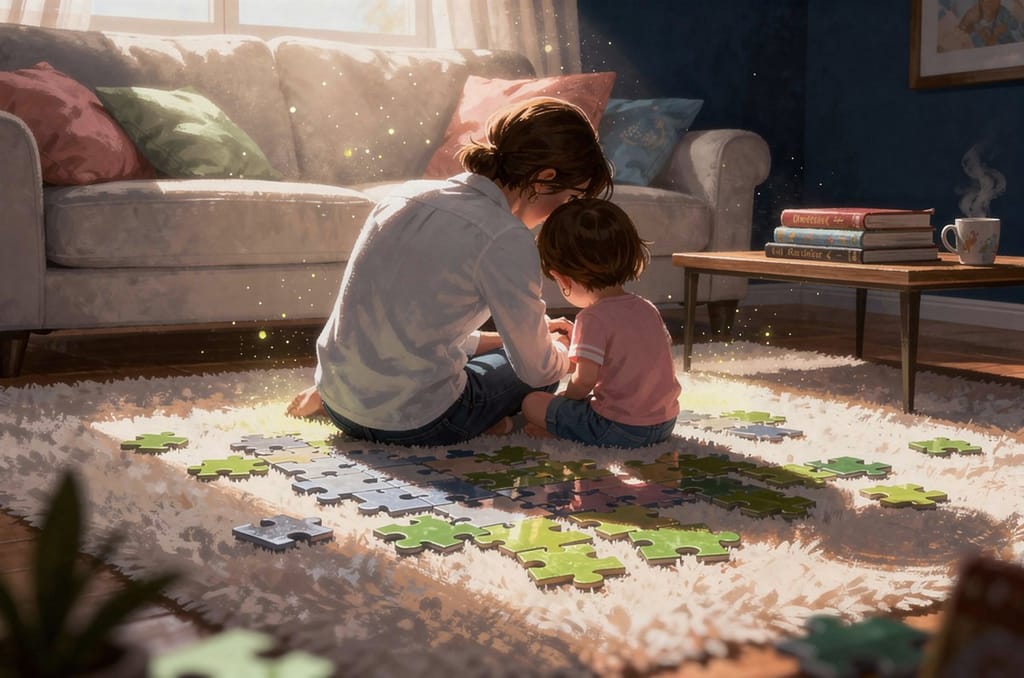
Completing a puzzle gives a child a visible, achievable win, and those small wins are how a sense of mastery is built. Unlike open-ended play, a puzzle has a clear finish line, so a child can point to it and say "I did it," which quietly grows the confidence to take on the next, slightly harder one. Done with a parent or sibling, it is also a calm, screen-free moment of together-time that is increasingly rare in a busy week. The activity is naturally low-stimulation, no flashing lights and no sound, just focused, side-by-side attention, which many families find settling at the end of the day. For more in this spirit, our guide to personalized gifts matched to what a kid loves leans on the same principle: a child returns again and again to the things that feel like theirs.
What does the science actually say?
Puzzles are clearly good for kids, but it is worth being straight about the evidence. Much of the research shows associations and short-to-medium-term improvements rather than proof that puzzles alone cause lasting gains. Many studies are small, and there is a chicken-and-egg question: children who already have strong spatial skills may simply choose to play with puzzles more, which can inflate the apparent effect. The well-known University of Chicago study is more convincing than most because it followed children over time and controlled for family income, parent education, and language, but even it describes a link, not a guarantee. The honest reading is that puzzles reliably accompany good developmental outcomes and plausibly help drive some of them. None of that is a reason to skip the puzzle basket, it is just a reason to keep your expectations sensible.
The fair summary
Puzzles are a low-cost, screen-free, genuinely enriching activity that research consistently links to spatial, motor, and cognitive development. Treat them as a promising support for learning, not a guaranteed shortcut to a math prodigy, and you will have it about right.
What puzzle is right for my child's age?
Match the challenge to the child: too easy is dull, too hard is frustrating, and the sweet spot is a puzzle they can finish with a little effort. As a rough developmental guide:
| Age | Pieces | What it mainly builds |
|---|---|---|
| 1-2 | Chunky knob, 2-6 | Grip, hand-eye coordination, shape matching |
| 2-3 | 6-12 (large) | Fine motor control, early problem-solving |
| 4-6 | 20-48 | Spatial reasoning, focus, picture reading |
| 7-10 | 48-100+ | Planning, persistence, logical thinking |
For under-3s, always choose age-appropriate large pieces, since small pieces are a choking hazard. The same logic applies to a custom photo puzzle: our own portrait puzzles start at a chunky 30-piece kids size, a big 11 by 14 inches that is easy for little hands, and go up to a 1,000-plus-piece challenge for older kids and grown-ups, so you can match the piece count to the child. You can browse the magical worlds and pick the one your child loves, since a picture they recognize, themselves, makes a harder puzzle feel more doable.
How do I get the most benefit from a puzzle?
Three things turn a puzzle from a time-filler into real development time: pitch the difficulty right, play alongside your child while narrating with spatial words, and choose a picture they actually care about. That last one matters more than parents expect, because a puzzle a child loves is a puzzle they come back to, and repetition is where the benefit lives.
Aim for a puzzle they can finish with a little effort, not none. Too easy is boring, too hard makes them quit. Size up as they improve.
Sit with them and narrate: edge, corner, flip, between. That spatial "puzzle talk" is half of what makes the activity so valuable.
A scene a child cares about pulls them back to the table again and again, and repetition is where the real development happens.
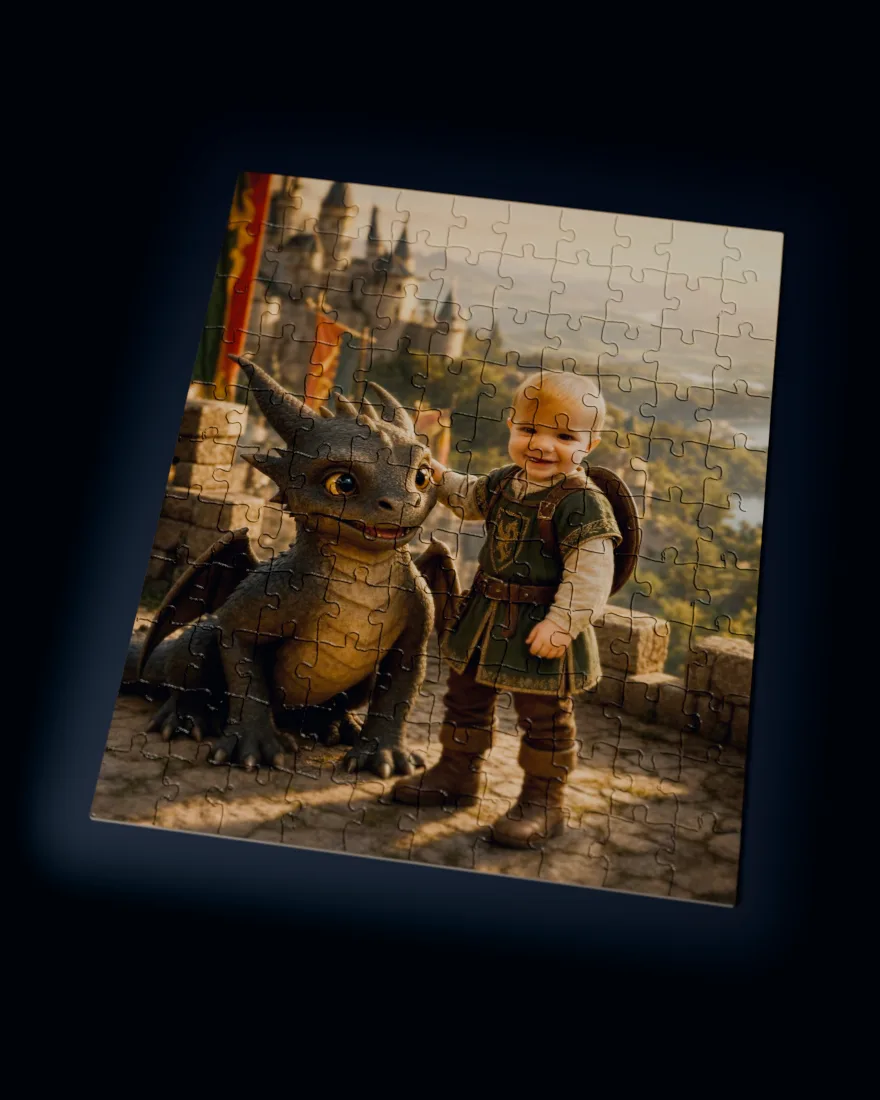
A puzzle they love is a puzzle they finish
That is the idea behind a puzzle where your child is the hero of the picture. Children are far more drawn to a scene starring themselves than a generic one, and you approve a watermarked proof before we print a single piece, so it arrives exactly right.
Frequently asked questions
Are puzzles educational for kids?
+
Yes. Research links puzzle play with stronger spatial reasoning, fine motor skills, problem-solving, and early math readiness, and puzzles are widely used by educators and occupational therapists. Most of the evidence shows associations and short-to-medium-term gains rather than guaranteed outcomes.
At what age can a child start doing puzzles?
+
Most children can start with chunky knob or large-piece puzzles from around 12 to 18 months, moving to 6 to 12 piece jigsaws by ages 2 to 3. Always choose age-appropriate, large pieces for under-3s, since small pieces are a choking hazard.
How do puzzles help brain development?
+
Completing a puzzle exercises spatial reasoning, problem-solving, visual perception, and memory at once. Studies have linked early puzzle play with better spatial-transformation skills, which are foundational for later math and STEM learning.
Are puzzles good for fine motor skills?
+
Yes. Grasping, pinching, and placing pieces builds hand strength and hand-eye coordination, and several studies have found puzzle-based play improves fine motor development in preschool-aged children.
How many puzzle pieces should my child have?
+
As a rough guide: 6 to 12 pieces for ages 2 to 3, around 20 to 48 pieces for ages 4 to 6, and 48 or more for ages 7 and up. The right challenge is one they can finish with a little effort.
Do puzzles really help with math and STEM?
+
Research has linked early spatial skills, which puzzle play appears to support, with later math ability. The effect looks strongest when an adult plays alongside and uses spatial words like edge, corner, and flip. It is a promising support, not a guaranteed path to STEM success.
Further reading
A few of the studies and ideas behind this article, if you would like to read further:
- The University of Chicago study on early puzzle play and preschoolers' spatial-transformation skill (Levine and colleagues, in Developmental Psychology) is the most cited link between puzzle play and spatial ability.
- Work by Verdine, Golinkoff, Hirsh-Pasek, and Newcombe connects early spatial skills with later mathematics readiness.
- A number of preschool studies have linked structured puzzle play with gains in fine motor and cognitive development.
This article is for general information and is not medical or developmental advice. If you have concerns about your child's development, speak with your pediatrician or a qualified specialist.
For help choosing one to make, see our roundup of the best custom photo puzzles for kids and our guide to picking the best photo for a custom puzzle.