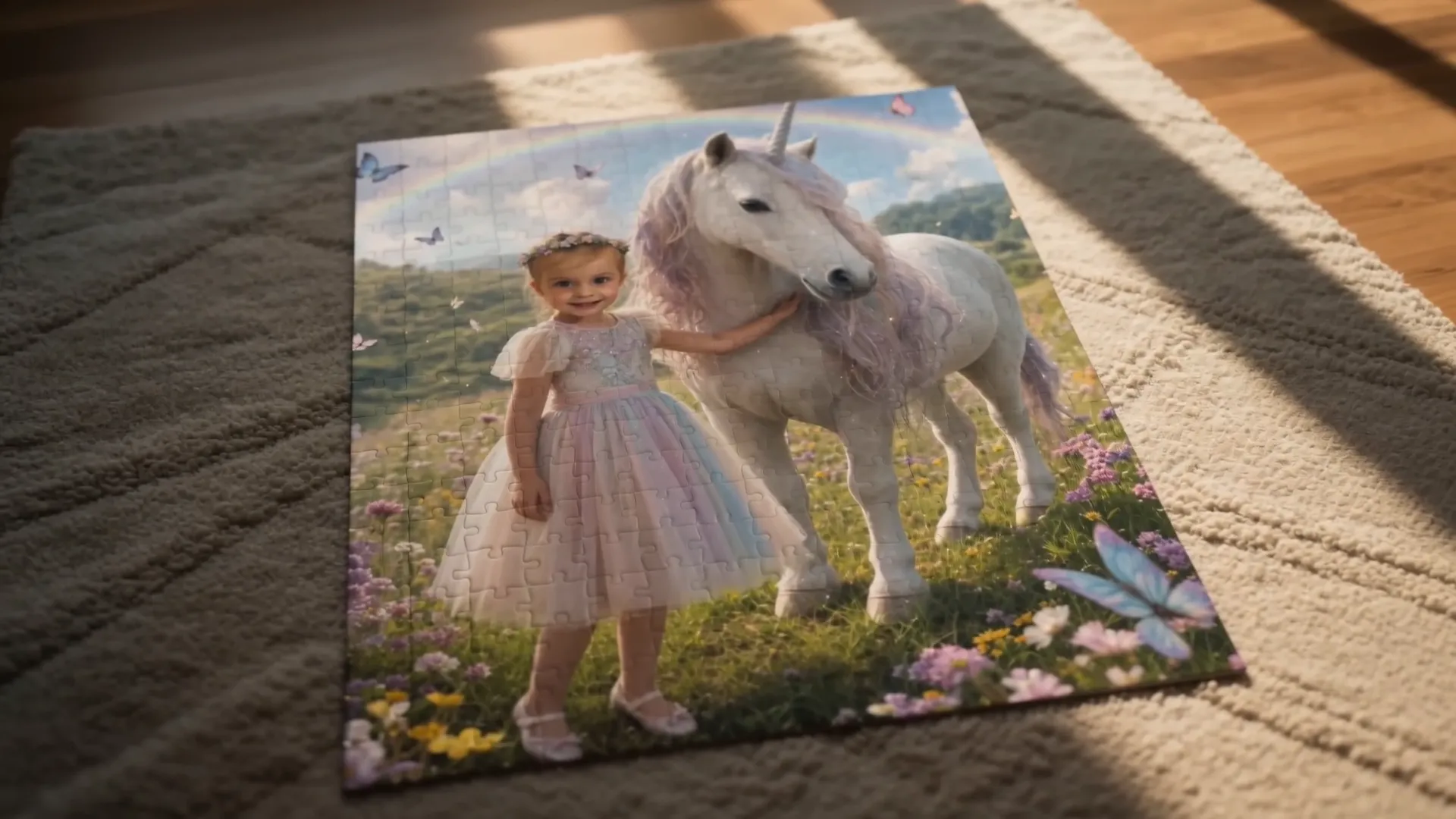
What makes a good custom photo puzzle? A buyer's guide
A good custom photo puzzle comes from a high-resolution image printed at roughly 300 DPI, has a piece count matched to the recipient's age, uses thick pieces that hold their shape, lets you approve a proof before anything prints, and handles your photo safely (deleted quickly, never used to train AI). Get those five right and you get a keepsake instead of a throwaway print.
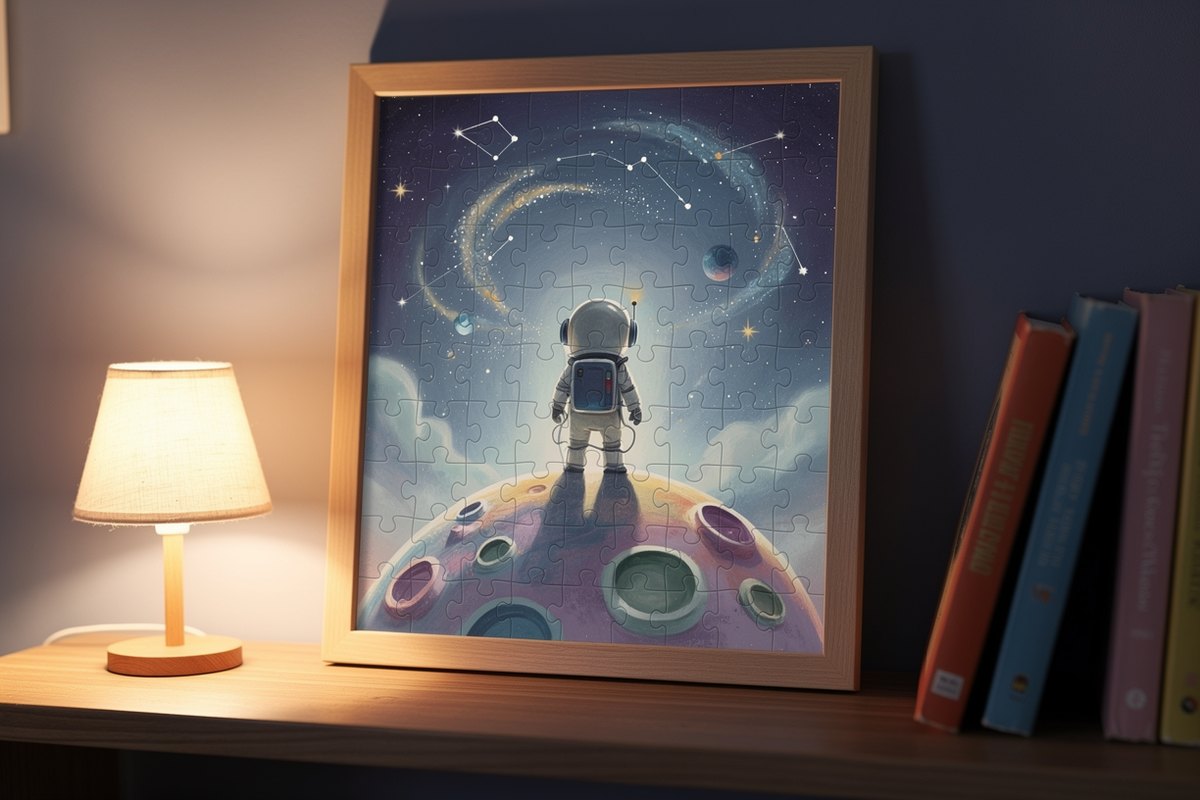
A good custom photo puzzle depends on five things: image quality, a piece count matched to age, sturdy pieces, a proof step before printing, and responsible photo handling. Many "personalized puzzle" listings only get two or three of these right, which is why so many arrive blurry, flimsy, or wrong-sized for the kid. This guide walks through each factor so you can tell a real keepsake from a drugstore-grade print before you spend $59 or more.
| Piece count | Best for age | Use case |
|---|---|---|
| 30 (chunky) | Ages 3 to 5 | Large grip-friendly pieces, no choking hazard |
| 110 | Ages 5 to 7 | A first standard jigsaw |
| 252 | Ages 6 and up | Family puzzle nights |
| 520 | Older kids and adults | A satisfying solo or shared build |
| 1,014 | Teens, adults, collectors | A keepsake-grade challenge — start your puzzle |
What image quality and resolution should a custom photo puzzle have?
A custom photo puzzle should be printed at roughly 300 DPI, well above the ~150 DPI minimum the jigsaw industry treats as the floor for sharp pieces. That margin matters because a puzzle is viewed up close, piece by piece, where soft edges and pixelation are obvious. The catch: a normal phone photo isn't nearly enough pixels to fill a 520- or 1,014-piece print area on its own. A good maker upscales the final image to the exact print dimensions before it goes to press, so faces stay crisp at full size. Also ask how the image is printed: dye-sublimation (used by quality puzzle providers) bonds ink into the surface and resists fading better than a cheap surface print.
How do I match piece count to a child's age?
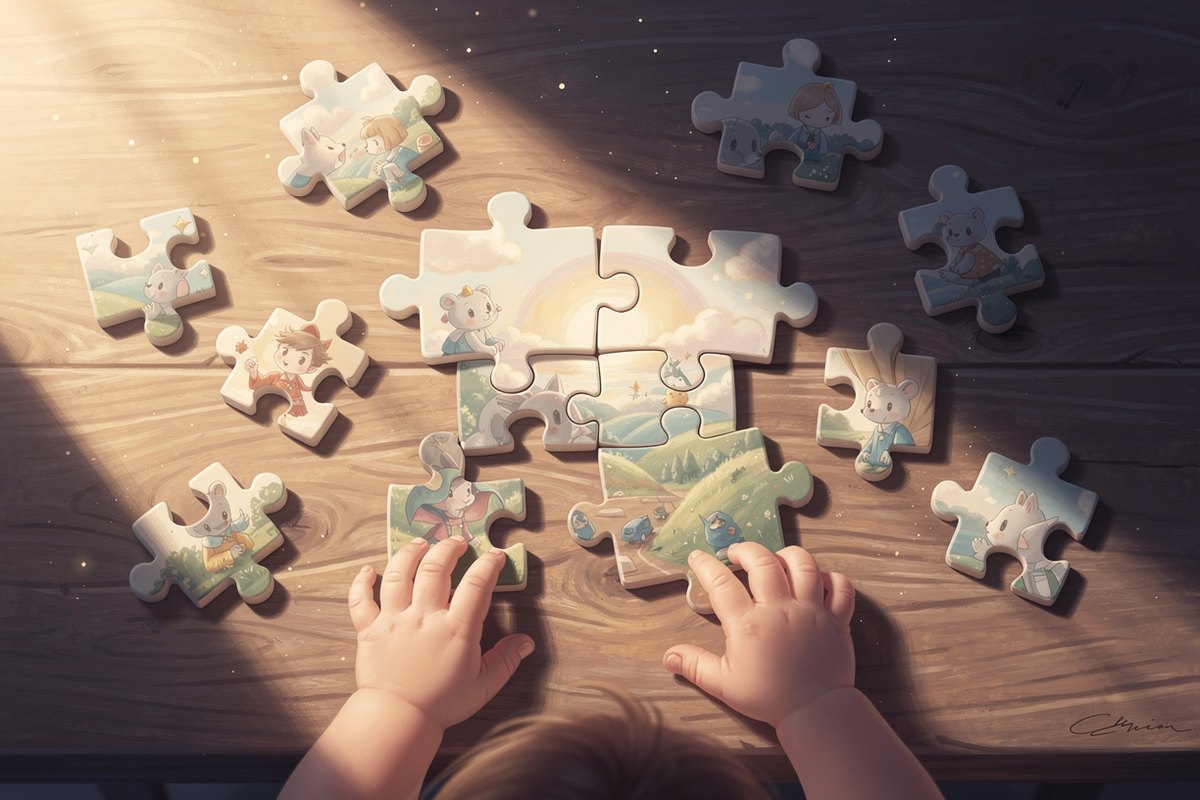
Match the piece count to the child's age and patience, not to what looks impressive in a photo. For ages 3 to 5, choose a low count of large, chunky pieces (around 30) that little hands can grip and that aren't a choking hazard. A first standard jigsaw of around 110 pieces suits ages 5 to 7; ages 6 and up can handle a family-friendly 252-piece puzzle; older kids and adults enjoy 520 pieces; and 1,014 pieces suits teens, adults, and collectors. The Curious Thing offers all five tiers, including a 30-piece chunky kids size built specifically for ages 3 to 5. A puzzle that's too hard gets abandoned; one that's too easy gets ignored. When in doubt, size down a tier.
What makes puzzle pieces sturdy enough to last?
Sturdy pieces are thick, cleanly die-cut, and snap together without bending, peeling, or fraying at the edges. Thin chipboard warps with handling and humidity, and a flimsy piece is what separates a $10 novelty from a keepsake you keep for years. For young children, sturdiness is also a safety issue: the chunky pieces in a true kids tier are large enough to be age-appropriate for 3-to-5-year-olds and durable enough to survive repeated assembly. When you're comparing options, look for puzzles described as premium or keepsake-grade rather than just "photo puzzles," and check that the kids size is a purpose-built blueprint with large pieces, not the adult puzzle with fewer cuts.
Why does a proof step before printing matter?
A proof step lets you see and approve the exact image before anything is printed, which is the single best protection against a disappointing custom puzzle. Printing is permanent, so without a proof you're gambling that the crop, colors, and likeness all came out right. This matters even more for transformation-style puzzles, where AI turns your child into the hero of a scene rather than just cropping a photo onto a grid. The Curious Thing sends a watermarked proof you actively approve first, and nothing goes to print until you say yes. If a seller prints straight from upload with no review, treat that as a real risk, not a convenience.
How should a custom puzzle company handle my child's photo?
A trustworthy maker uses your photo only to create your puzzle, deletes the original quickly, and never feeds it into AI training. Look for three specific, checkable promises: the uploaded photo is deleted within 24 hours; your images are never used to train AI models; and, for AI-generated puzzles, the child's name is never sent to the image model. The Curious Thing commits to all three. Vague language like "we value your privacy" isn't enough, especially when a child's face is involved. A clear, written privacy practice you can point to is part of what separates a careful keepsake brand from a generic print shop.
Photo crop vs. hero transformation: which is a better custom puzzle?
A simple photo crop puts your existing picture onto a puzzle grid; a hero transformation reimagines your child as the star of a scene, like an astronaut, mermaid, or superhero. Both can make good puzzles, but they answer different wishes. A crop is best when the photo itself is the memory you want to preserve. A transformation is best as a gift that delights, because the child sees themselves inside a world they love. The Curious Thing focuses on the transformation approach, paired with the proof-and-privacy standard above. Whichever you choose, the resolution, piece-count, sturdiness, proof, and privacy checks all still apply.
Frequently asked
What resolution does a photo need for a custom puzzle? +
The finished print should land near 300 DPI, comfortably above the roughly 150 DPI minimum used in jigsaw printing. A single phone photo usually isn't enough pixels for a 520- or 1,014-piece print area on its own, so a quality maker upscales the final image to the exact print size before pressing. That's why the proof and the maker's process matter more than the megapixels of your original photo.
What piece count is best for a young child? +
For ages 3 to 5, choose around 30 large, chunky pieces that are easy to grip and age-appropriate. A first jigsaw of about 110 pieces fits ages 5 to 7, ages 6 and up do well with 252 pieces, older kids and adults with 520, and teens, adults, or collectors with 1,014. The Curious Thing offers all five tiers, including a dedicated 30-piece chunky kids size. When unsure, size down so the puzzle stays fun rather than frustrating.
Is it safe to upload my child's photo for a custom puzzle? +
It's safe when the company is specific about how the photo is handled. The standard to look for: the original upload is deleted within 24 hours, your images are never used to train AI models, and for AI-generated puzzles the child's name is never sent to the image model. The Curious Thing commits to all three, and you approve a watermarked proof before anything prints.